Anti-SLAPP law hasn’t succeeded in shifting defamation’s focus away from offence and distress
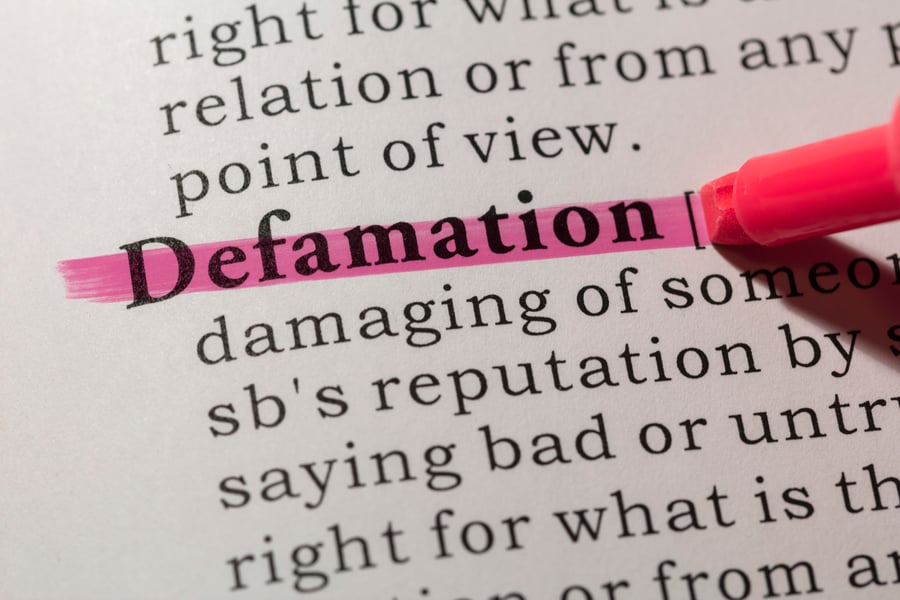

Defamation protects reputation. Yet the tort has drifted from this focus and instead grounds liability in offence and distress. One goal of anti-SLAPP laws in Ontario, BC, and Manitoba was to reorient defamation toward reputational harm. Yet some courts have been reluctant to give anti-SLAPP law this effect. Benchwood Builders v Prescott, currently before the Supreme Court, provides an opportunity to clarify the need for reputational harm. Otherwise, anti-SLAPP law cannot achieve its purpose, and defamation risks being a tort of offence.
It’s easy to sue in defamation because the plaintiff needs only to prove that the defendant communicated words about them that would tend to cause reputational harm. The plaintiff needn’t prove that the words are false, malicious, or caused harm. Though reputational harm is central to the tort of defamation, it was thought too hard to prove and is therefore presumed in common-law Canada. In contrast, England and Australia have abandoned this presumption. They now require proof of serious reputational harm. Instead, our courts look to the meaning of the words and whether they would tend to harm reputation, rather than their real-world effect.
As a result, the tort’s focus has shifted from reputation to disparagement.
Offence and distress have never been sufficient injuries to ground liability in defamation. If it were defamatory to offend or insult, without also damaging reputation, freedom of expression would be seriously curtailed. Prima facie liability would lie for virtually any speech about plaintiffs that they don’t like. And while defamation has defences such as truth, the Supreme Court in Grant v Torstar warned that these place a heavy burden on defendants and may be hard to prove, even where speech is defensible.
In Hansman v. Neufeld, 2023 SCC 14, Justice Côté, in a dissent, suggested that injury in the form of upset or other emotional consequences can count as harm for defamation purposes, even when the defendant’s words are not believed, and there is therefore no reputational harm. The cited sources do not support the proposition, and this has never been true in common-law defamation (though it may be true of civil-law diffamation). Reputational harm is required.
Anti-SLAPP law was supposed to shift defamation’s focus back to reputation.
Anti-SLAPP motions have three steps. I address only the third – the “crux of the analysis”. Ontario’s Courts of Justice Act, s. 137.1(4)(b) requires the plaintiff to “satisf[y] the judge that…the harm likely to be or have been suffered by the responding party as a result of the moving party’s expression is sufficiently serious that the public interest in permitting the proceeding to continue outweighs the public interest in protecting that expression.”
When the cause of action is defamation – as it usually is on an anti-SLAPP motion – this subsection requires proof of harm to reputation caused by the relevant words. The Supreme Court said so in 1704604 Ontario Ltd. v. Pointes Protection Association, 2020 SCC 22: “the statutory language therefore requires two showings: (i) the existence of harm and (ii) causation — the harm was suffered as a result of the moving party’s expression.”
Pointes Protection refers to harm rather than reputational harm, but presumably because anti-SLAPP law applies to wrongs other than defamation. In a contract case, the relevant harm could be economic. But where the issue is defamation, “the harm that the litigation purports to address” (Hansman) is reputational.
The Supreme Court recently heard oral arguments in Benchwood Builders. As in Hansman, the previous anti-SLAPP case it heard, there seems to be little, if any, evidence that the words at issue caused reputational harm.
The case involves a dispute between homeowners and their contractor, Benchwood Builders. The homeowners posted on social media that Benchwood’s co-owner was dishonest, a “con artist,” and that he threatened and falsely accused women of assault. It seems most posts were removed almost immediately, though how long posts stayed online is contested. Other customers had experienced problems with Benchwood, resulting in prior public complaints against them and the revocation of Benchwood’s membership in the Niagara Home Builders’ Association. There was no evidence that anyone had seen the defendant’s posts or that they resulted in a loss of business. Benchwood is suing the homeowners for defamation, seeking $1.5M.
At the Court of Appeal for Ontario, Benchwood largely turned on the public-interest issue. The anti-SLAPP law applies only to proceedings grounded in public-interest expression. The court held that the online posts about a construction business were not a matter of public interest. I think the court interpreted the public interest too narrowly. Still, the potentially harsh consequences of anti-SLAPP laws may be leading courts to narrow the scope of the public interest test.
On the issue of reputational harm, however, the court seems to have rejected any need for proof of such harm at the balancing stage of the anti-SLAPP test. It noted the motion judge’s finding that the defendants’ posts caused little or no reputational harm, without overturning it. The court then suggested that at the balancing stage, this fact was outweighed by the lack of public interest in protecting the expression. The motion was dismissed, and Benchwood’s claim was allowed to proceed.
This leaves in doubt whether s. 137.1(4)(b) requires the plaintiff to demonstrate any reputational harm and contradicts the Supreme Court’s decisions in Pointes Protection and Hansman: a plaintiff’s failure to show some past or future reputational harm is determinative of the s. 137.1(4)(b) inquiry, with greater proof of injury required as the public interest in protecting the expression increases.
Canada’s anti-SLAPP provisions have effectively rewritten defamation law, for better and for worse. I have written elsewhere about their unintended effects. Here, I’ve focused on one way in which anti-SLAPP law was intended to change defamation law, but arguably hasn’t. Benchwood Builders should emphasize the need for reputational harm. This flows from statutory interpretation and helps refocus defamation law on reputation, where it belongs.