

Split ruling sets out test for assessing whether labour matters fall under direct or derivative jurisdiction
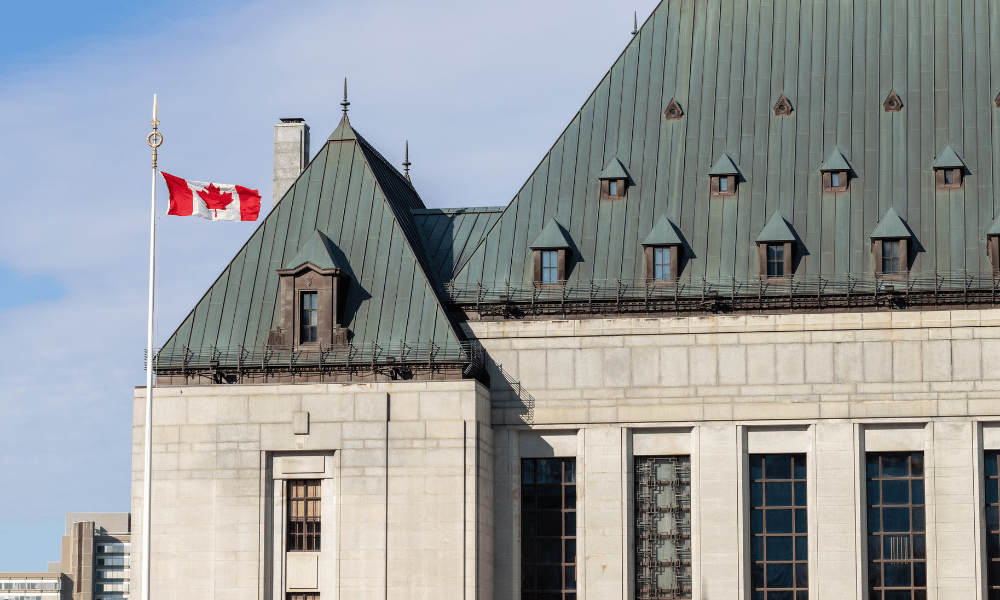
The labour activity of a group of Montreal grain inspectors and graders is subject to derivative rather than direct federal jurisdiction, the Supreme Court of Canada ruled in a split decision Friday.
In Canada, labour relations – which involve union activity like collective bargaining – typically fall under provincial jurisdiction.
However, they can fall under federal jurisdiction in limited circumstances. Federal jurisdiction in these cases can be direct, as when the employer in question owns, manages, controls, or otherwise operates a federal work or undertaking. It can also be derivative, as when the employer is a third party providing services that are vital, essential, or integral to a federal work or undertaking.
Friday’s ruling in Quebec (Attorney General) v. SGS Canada inc. that the Montreal grain inspectors and graders’ bid to unionize falls under derivative federal jurisdiction aligns with findings by two lower courts and Quebec’s Administrative Labour Tribunal.
SCC Justice Andromache Karakatsanis, who authored the majority decision, said the case represents “an opportunity to clarify how Parliament can acquire jurisdiction over employees working in federal works or undertakings.”
Justice Nicholas Kasirer dissented, arguing that Quebec labour law, not federal law, applied. Chief Justice Richard Wagner and Justices Suzanne Côté and Michelle O'Bonsawin joined Kasirer. All three dissenting justices are from Quebec except O'Bonsawin.
The case involves SGS Canada inc., which provides testing, inspection, and certification services to various industries across the country. One of its divisions, which focuses on agriculture and agri-food, has a branch in Montreal with 14 inspectors and graders. Those employees work almost exclusively for six grain elevators – facilities where grain is stored and prepared for transportation – along the St. Lawrence River.
Because grain elevators are considered works for the “general advantage of Canada” under the Canada Grain Act, they are federally regulated. The 14 inspectors and graders at the Montreal branch evaluate grain elevators and grade grain to ensure it meets the standards set by the Canada Grain Act.
However, the Montreal branch operates independently from other branches in SGS’s agriculture and agri-food division. Although SGS handles human resources, payroll management, and most client contact centrally, the branch has its own offices, infrastructure, employees, and finances. The branch’s employees also do not rely on or work with employees in other branches.
In 2019, the Syndicat des travailleuses et travailleurs des industries manufacturières – CSN, a union, applied to Quebec’s labour tribunal to be certified as the 14 employees’ collective bargaining representative. However, the tribunal dismissed the union’s application, finding that the Montreal branch’s labour relations did not fall under provincial jurisdiction. Instead, the tribunal found they fell under derivative federal jurisdiction.
The tribunal decided the Montreal branch’s labour relations did not fall under direct federal jurisdiction because SGS did not operate any of the grain elevators itself. Its agriculture and agri-food division was also functionally separate from the rest of SGS's operations.
The Quebec attorney general challenged the tribunal’s decision with the Superior Court of Quebec, arguing that the Montreal branch’s labour relations were not subject to federal jurisdiction at all.
However, both the trial court and the Quebec Court of Appeal agreed with the tribunal’s decision, and the appellate court found that the tests for both direct and derivative federal jurisdiction had been met. The attorney general filed an appeal with the SCC.
Writing for the SCC majority, Karakatsanis said only derivative federal jurisdiction applied in this case.
The justice laid out the considerations courts must make to determine which type of federal jurisdiction applies. To meet the test for direct jurisdiction, the employer in question must own, manage, control, or otherwise operate a federal work or undertaking.
Derivative jurisdiction applies when the employer is a third party whose services are vital, essential, or integral to one or more federal works or undertakings. Those services must also be significant to the employer itself.
In some cases, branches or divisions of a larger company may be considered separately, particularly when their functions or operations are sufficiently distinct from those of the rest of the company. This is the case with the Montreal branch of SGS’s agriculture and agri-food division, which is largely managed independently of SGS, Karakatsanis said.
The justice said that direct jurisdiction does not apply to the 14 grain inspectors and graders because they do not directly operate the federally regulated grain elevators.
Instead, derivative jurisdiction applies because the inspectors and graders work for a third party – SGS’s Montreal branch – that provides services to the grain elevators. These services are integral to both the grain elevators and the Montreal branch; 90 percent of the branch’s services involve the grain elevators.
Karakatsanis dismissed the attorney general’s appeal.
The parties in the case did not immediately provide comments on Friday’s ruling.