


Jump to winners | Jump to methodology
Proudly sponsored by

Presenting Canadian Lawyer's inaugural list of the 20 best family law firm teams in Canada for 2026, demonstrating what it looks like to practise exceptionally well and bypass court backlogs
Canada's family courts carry one of the most consequential caseloads in the civil justice system. From April 2024 to March 2025, family law cases accounted for approximately 30 percent of all active cases in Canadian civil courts, according to Statistics Canada's Civil Court Survey, published on March 26, 2026.
In absolute terms, that translates to just over 278,500 active cases across the six provinces and three territories reporting to the survey, of which 108,273 (39 percent) were newly initiated and 170,230 (61 percent) were ongoing from a prior fiscal year.
Three provinces dominate the national picture. Ontario, British Columbia, and Alberta together account for more than 90 percent of all active family law cases reported to the survey. The caseload itself grew: the number of active family law cases was 14 percent higher in 2024/25 than in the previous fiscal year, driven primarily by a 25 percent increase in ongoing cases in Ontario – largely the result of Ontario courts resuming the administrative dismissal of dormant files that had been paused during the COVID-19 pandemic, rather than a genuine rise in newly disputed matters.
Twenty firms have earned a place on Canadian Lawyer’s inaugural Top Family Law Firm Teams list for 2026 – and they share a defining quality: they are built around the client, not around the courtroom. Across different sizes, cities, and practice structures, Canada’s top family law firm teams pursue resolution outside of court first, invest heavily in client communication, and measure success by their clients’ goals rather than a binary legal outcome.
They are doing this against a system under significant strain. Family law cases account for approximately 30 percent of the entire active civil court caseload nationally, and the proportion of matters carried forward from a prior year reached 61 percent in 2024/25 the highest on record since 2005, according to Statistics Canada’s Civil Court Survey. In Ontario, the country’s most congested jurisdiction, litigants in some courts wait up to five years from filing to trial.
According to the Department of Justice Canada’s 2022 National Family Law Surveys, approximately 86 percent of family law matters resolve without a full trial. The best teams are not just achieving that number – they are building the systems, preparation practices, and client relationships that make it possible.
Patricia Nelson, senior lawyer, certified divorce coach, and founder of Nelson Family Law in Mississauga, ON, names honesty as the non-negotiable quality that separates good family law practice from poor family law practice.
“Clients want to be seen and heard, but this also means the lawyer must be honest about expectations and set clear boundaries,” says Nelson. “A lawyer who parrots back what the client says or wants performs a tremendous disservice to both parties, and the client will invariably be dissatisfied.”
Nelson also names process clarity as a defining element of client satisfaction, something she observes many firms still fail to deliver. That involves ensuring clients are involved at every step, explaining strategy and outcomes so nothing happens in the dark, and maintaining reasonable response times throughout.
“Reasonable approaches and diligence in working toward settlement without going to court should be the first strategy,” she says. “And if this happens, this is a success.”
The 61 percent ongoing case figure is not a new problem. It is the terminus of a decade-long deterioration. In 2018/19, two years after the Supreme Court of Canada’s R v. Jordan decision redirected court resources from civil to criminal matters, ongoing family law cases made up more than half (52 percent) of the active family law caseload for the first time since the Civil Court Survey was launched in 2005. The pandemic then closed courtrooms and suspended hearings, compounding delays that were already structural in nature.
The consequences are severe in Ontario, the country's most congested jurisdiction. According to The Advocates’ Society’s July 2023 report, Delay No Longer. The Time to Act Is Now, litigants in Brampton face waits of more than four to five years from the original application to trial for complex family law matters.
A motion of longer than two hours can take 1.5 years to be heard in Toronto. The report described delays as having reached a “crisis” point, affecting every level of court in every jurisdiction.
One narrow measure offers cautious optimism: the median time to a first disposition, which includes administrative events such as settlements, stays, and dismissals, fell to 48 days in 2024/25, the shortest on record since all current Civil Court Survey respondents began reporting in 2014/15. But analysts note this top-line statistic masks the reality of contested proceedings, where timelines remain dramatically longer.
Despite the volume, family law in Canada is overwhelmingly a negotiated discipline. According to the Department of Justice Canada’s 2022 National Family Law Surveys, the most comprehensive recent dataset on resolution patterns, approximately 86 percent of matters in surveyed lawyers’ caseloads resolved without a full trial.
Negotiation before trial was the most common pathway (48 percent of cases), followed by settlement conference (24 percent). Only 14 percent of cases proceeded to a judge’s decision after a hearing or trial.
Mediation accounted for 11 percent of resolutions, and collaborative family law 9 percent, together representing roughly one in five cases. A separate Department of Justice Canada dataset on custody and access outcomes found that 66 percent of child custody and access orders were decided by consent, with contested orders representing only 34 percent. The Supreme Court of Canada has acknowledged the direction of travel, noting the profession’s movement away from “an adversarial culture of litigation to a culture of negotiation.”
Self-representation complicates the picture. At least one respondent was self-represented at some point in 65 percent of active family law cases in 2024/25, based on data from four reporting provinces – Ontario, Nova Scotia, New Brunswick, and Prince Edward Island. The figure shapes how disputes unfold, how long they take, and how effectively parties can access the profession’s expertise in negotiation and ADR.
Over one in four active family law cases (27 percent) in 2024/25 involved financial support as an issue requiring court resolution. Within that group, child support was the only type sought in 56 percent of cases; spousal support featured alone in 8 percent; both child and spousal support together in 8 percent; and 28 percent were unspecified.
New spousal support filings increased 4 percent year over year, and cases involving both child and spousal support rose 6 percent, suggesting greater financial complexity in the disputes reaching courts. Eighty-one percent of active cases with support issues were ongoing from a previous year, reflecting the difficulty and cost of resolving financial matters where income disclosure and contested positions make resolution slow.
The Federal Child Support Tables, the backbone of all child support calculation under the Divorce Act, were updated in October 2025 for the first time since November 2017, revised to reflect current tax rules. The update matters practically. The old tables governed all calculations for periods before October 1, 2025, while the new tables apply from that date forward, creating a dual-table environment practitioners must navigate in any matter straddling the cutoff.
A related reform pressure point is active at the policy level. In 2024, the Department of Justice Canada undertook a stakeholder consultation on the Federal Child Support Guidelines, with a specific focus on section 9 – child support in shared parenting time arrangements.
The issue is that section 9’s discretionary nature means families in shared-parenting arrangements cannot access administrative child support services to calculate or recalculate amounts. They must go to court. Stakeholders have called for more structure and simplicity, with the goal of reducing the number of contested matters that consume court resources.
Canada holds a notable international distinction. It has the largest proportion of couples in common-law relationships among G7 nations, at 23 percent, according to the 2021 census released by Statistics Canada in July 2022.
That compares to 21 percent in the UK, 18 percent in France, 12 percent in the United States, and 10 percent in Italy. In absolute terms, Canada counted 1,949,275 common-law couple families in 2021, a figure that has grown by 447 percent since 1981, against a 26-percent growth for married couples over the same period.
Quebec drives the national average. Remove the province, and the common-law proportion across the rest of Canada falls to 17 percent. In Quebec, 43 percent of couples live common-law, 65 percent of births occur outside marriage, and common-law couples are more likely to have children at home (49 percent) than their married counterparts (45 percent).
Nunavut and the Northwest Territories follow similar patterns, with 52 percent and 36 percent of couples in common-law unions, respectively.
The legal consequences of this demographic reality are significant. According to The Vanier Institute of the Family’s November 2023 report, The Rights of Common-Law Partners in Canada (Breton and Hilbrecht), property rights for common-law spouses are governed by provincial legislation only, with no national framework.
The result is substantial disparity. In Ontario, common-law partners are recognized for spousal support only after three years of cohabitation. In other provinces, the thresholds and entitlements differ.
Property division rights available to married spouses under provincial family property legislation do not automatically extend to common-law partners in most jurisdictions, a gap that generates complex litigation when these relationships end. For the family law firm teams recognized in this report – many of whom serve clients across this full demographic spectrum – the absence of a national property framework for common-law partners is one reason that negotiated resolution, rather than courtroom adjudication, matters so much to the people who most need it.
Legal technology adoption in Canada’s family law sector is accelerating, but the pace varies sharply by firm size.
The legal industry is leading all professional sectors in generative AI adoption, according to Thomson Reuters Institute's 2025 Generative AI in Professional Services Report (1,702 respondents, primarily from the US, Canada, UK, and Australia). Legal organizations, including firms and corporate legal departments combined, saw GenAI adoption nearly double, from 14 percent in 2024 to 26 percent in 2025.
Family law practitioners sit at 26 percent individual adoption, above trusts and estates (25 percent) but below civil litigation (36 percent), according to the AffiniPay 2025 Legal Industry Report, covering 2,800-plus legal professionals across the US and Canada.
At the practice level, DivorceMate, the proud sponsor of this report, remains the tool most deeply embedded in Canadian family law. The Toronto-headquartered platform has between 6,500 and 8,000 users, including lawyers, judges, mediators, and paralegals, according to the company.
Founded in 1987 and in use by members of the Canadian judiciary, DivorceMate calculates child and spousal support under the Federal Child Support Guidelines and the Spousal Support Advisory Guidelines, runs net disposable income analyses, apportions section 7 expenses, and generates court-ready financial forms and domestic contracts.
In 2024/25, the platform migrated to the cloud, a transition its CEO Michael Perlman described as keeping pace with both innovation and security demands. For the firms recognized in this report, tools such as DivorceMate function as foundational infrastructure.
The four firms profiled below arrived at the same conclusions independently and built their practices around them.
Boyes Tiefenbach Bannister Family Law Counsel LLP in Calgary (2–6 lawyers) prepares clients for mediation with tools as specific as a “trigger bingo” card, mapping the language most likely to provoke an emotional response before the session begins.
Toronto’s Battaglia Law Professional Corporation (2–6 lawyers) brings a law clerk or articling student into every initial consultation so the client sees their full team from day one and trust is established before difficult advice needs to be delivered.
Crossroads Law, a 28-lawyer firm present across Vancouver, Calgary, and Edmonton (11–31 lawyers), has built values-based hiring, 24-hour response standards, and a mentorship chain that ensures communication problems surface and get addressed.
YLaw, operating across Vancouver, Langley, and Chilliwack, BC (11–31 lawyers), runs a dedicated ADR centre alongside a separate litigation department, with the case determining which path it takes.
What these firms also share is a clear-eyed view of technology: useful for research, drafting, and administration, but not a substitute for the human judgment, contextual reading, and strategic reasoning that clients come to a family lawyer to access.

Family law does not happen in a courtroom. It happens on a Friday afternoon when an aggressive affidavit lands in the inbox, at a kitchen table where a separation agreement needs to make sense before it can be signed, and in a mediator’s office where the wrong word at the wrong moment can unravel months of progress.
Partners Tara G. Tiefenbach and Traci L. Bannister understand this. It is the animating principle behind how they practise, staff, and communicate, and it is what earned their Calgary firm a place on Canadian Lawyer’s inaugural Top Family Law Firm Teams list for 2026, in the 2–6 lawyer category.
The firm’s model is deliberately expansive in its definition of who belongs on the team. Tiefenbach draws on a network that extends well beyond the lawyers in the office to build around each client the full support system their situation requires.
“Our team not only involves our office, but it also involves other professionals. If our clients need mental health professionals, we gather those to build the support system for them. That can include accountants, financial advisors, business valuators, and even other lawyers. And sometimes our clients even need second opinions just to help them along the way,” Tiefenbach says.


Bannister, who focuses heavily on high-conflict parenting matters, returned to Calgary just days before this interview from the Association of Family and Conciliation Courts’ annual conference in Seattle, an international gathering of family lawyers, judges, mediators, arbitrators, and mental health professionals. She frames ongoing education as essential.
“It was just a reminder to me of how important ongoing education is for family lawyers, making sure that you’re understanding the law, because even family law is changing all the time,” she says. “But also understanding the underlying concerns that clients have, and recognizing that, as a family lawyer, they’re coming to you not only because you know the law, but because you have the experience and expertise to be able to support them in this aspect of their life. It’s a life-changing experience for everybody.”
Whole-office communication cover: how Boyes Tiefenbach Bannister ensures no client goes unanswered
For Tiefenbach, communication is a core discipline. Every client email and call gets a response. When a lawyer is unavailable, the whole office steps in, including assistants, the receptionist, or the office manager. When a lawyer is on vacation, colleagues manage each other’s files. Even billing is treated as a communication moment. Lawyers walk clients through the time charged, because understanding the invoice is part of understanding the process.
“Knowing that their emails and calls are being responded to, knowing that we’re either on it or scheduling, even if we’re busy for a week, them knowing that situation and that we’ll get back to them, and having that call scheduled. I think that’s very, very important,” she explains.
Bannister is equally attentive to how communication lands, particularly when legal correspondence carries emotional weight that clients are not equipped to absorb alone. When a hostile affidavit arrived in one matter, one she describes as so aggressive it shocked even her, she made a deliberate choice not to forward it.
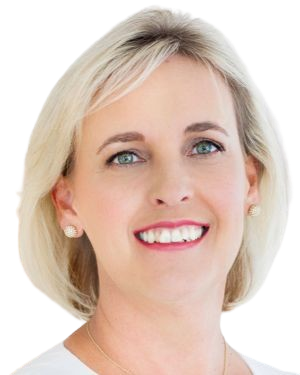
“I said to my client, we received the affidavit, but I’m not going to send it to you. I want to arrange a meeting with you and your counsellor so that we can discuss what is said in this affidavit together and work through it in a way that you can handle,” she recounts.
The Friday filing protocol: managing emotionally loaded correspondence
Both lawyers have also noticed the Friday pattern of aggressive documents and last-minute filings that land when clients are heading into the weekend with no support around them. The firm handles this by reading each client individually. Some want the material held until Monday; others want it immediately. The practice accommodates both.
The over-preparation method: Tiefenbach’s mediation preparation framework
Preparation for mediation is where the top family law firm team invests the most. Tiefenbach describes over-preparing as a default, working through best- and worst-case scenarios, cost-benefit analysis, what each option requires from the other party, and the full dynamics of the room the client is about to enter.
The trigger bingo card: how Bannister prepares clients for high-conflict mediation
Bannister has developed a specific tool for her high-conflict parenting matters: a “trigger bingo” card built collaboratively with the client before mediation begins. Together, they map the words and phrases most likely to provoke an emotional reaction, not to prevent an emotional response, but to ensure the client is ready for it when it comes.
“You can control your emotional response so much more when you’re ready for the trigger or when you prepare yourself in certain ways. That’s just one example of making sure that clients are prepared for the process that they’re going into,” adds Bannister.
For Tiefenbach, a successful outcome is not defined by what a judge orders. It is defined by whether clients leave the process empowered to make decisions for themselves, their families, and whatever comes next, including co-parenting arrangements that will outlast the legal file by years.
Bannister adds strategic rigour to this philosophy. When the other party is cooperative, options are wide and the path can be straightforward. When they are not, the strategy must change, and part of the lawyer’s job is being honest with the client about which options have closed.
“I have to say to my client, ‘Here are your options. But remember, these options here require the cooperation of the other party.’ You might not have those options available anymore, and then you’ve got to change your strategy and approach and use different processes to be able to get the matter resolved,” Bannister explains.
Both lawyers are candid about their approach to technology: deliberate, conservative, and unapologetic. Clients can look up the law. ChatGPT can summarize statutes. What clients cannot get from a search engine is a lawyer who understands the human complexity of their specific situation and can help them navigate it with confidence.
“Our clients come to us because they want the human judgment,” Bannister says. “What they’re coming to us for is to help them navigate the process and the human complexities with confidence. That’s what we offer. That’s why our clients trust the advice that we’re giving them, because we’ve got that human approach to it.”
Tiefenbach notes that clients now routinely arrive with AI-generated legal briefs, ready to be reviewed, challenged, and contextualized by a practitioner. In-person meetings remain the strong preference. The technology handles none of that.
“Clients will call, and they don’t want to book a call with me; they’ll want to book an in-person meeting,” she remarks. “It’s that personal interaction, that personal connection. They’ll come to us with their own AI-generated legal brief, and they want our opinion on it; they want us to go through it. It’s very much a personal relationship and a very important one that they need to get through and navigate this process.”
Bannister frames it simply. For most clients, a separation or divorce is a singular event in their lives – one they want to get right.
“Going through divorce, separation … these things are so personal. And for them, it’s hopefully the one and only time they’re ever going to have to do this. They want to understand that there are options available to them, that it’s not just what the computer says, but that there are nuances in making decisions that can impact your family in different ways.”

Melanie Battaglia founded Toronto-based Battaglia Law Professional Corporation – a boutique practice in the 2–6 lawyer category – on a straightforward conviction that family law clients are not managing a legal problem, they are navigating a life crisis. That conviction shapes every decision the boutique firm makes, from who is in the room at an initial consultation, what time of day a difficult letter gets sent, and whether to pick up the phone just to check in.
That philosophy, consistently applied, is what earned Battaglia Law a place on Canadian Lawyer’s inaugural Top Family Law Firm Teams list for 2026, in the 2–6 lawyer category.
The full-team consultation model: why Battaglia Law introduces the whole team on day one
Battaglia’s first principle is that clients should see the full team immediately, not just their lawyer. From the initial consultation onward, a law clerk or junior is in the room alongside Battaglia herself. The clerk who will manage financial disclosure and correspondence is introduced at the outset, before any formal retainer is signed.
The logic is deliberate. By the time difficult advice needs to be delivered, such as the kind that clients may resist or struggle to absorb, the relationship is already established. Trust, Battaglia says, is not something that can be manufactured in the moment.

“The biggest piece is having the trust of the client and having had that rapport built,” she explains. “I find it’s the manner of delivery that takes time, in terms of how and when you do that. They trust you, and so they’ll give instructions that align with having built that rapport.”
This extends to the initial consultation itself. Battaglia is precise about the distinction between information and advice. In early meetings, she is providing legal information, including an overview of process, rights, and options. Expectation management comes once she is retained, progressing step by step through the client’s specific situation, with a child-focused lens applied wherever parenting is in issue.
The sensitive correspondence protocol: how Battaglia Law manages the timing of difficult letters
At Battaglia Law, correspondence from opposing counsel does not simply land in a client’s inbox. The firm’s clerks screen incoming letters as a matter of policy, assessing not just the content but the timing of when it reaches the client.
“We’re sensitive to – I find with family law clients – the time of day we send letters or correspondence from opposing counsel, especially depending on what the issues are. If it’s a parenting exchange and we’re receiving a letter at five o’clock, we know it may be upsetting to the client when there’s the parenting exchange happening; we’re holding onto that if possible. We’re mindful of what the issues are for that particular client and how we communicate what the other side is saying,” Battaglia explains.
The default is immediate transparency. Clerks forward correspondence to clients promptly, sometimes with a note that Battaglia has been in meetings and has not yet had the chance to review it. But when a letter is flagged as potentially distressing, particularly at a sensitive moment in a client’s schedule, it is held and escalated. The junior on the file or file clerk alerts Battaglia directly that this one needs to come from her.
The offline check-in: Battaglia’s informal client support practice
Beyond the formal channels, Battaglia keeps an informal line open with many of her clients. A check-in text or call after a difficult development is not unusual.
“I communicate with clients offline a lot, especially if I know they will have been upset by reading something from the opposing party. I’m just going to do a check-in to say, ‘Hey, how are you?’ I’ve been through it myself. It’s a very hard process,” Battaglia says.
Battaglia Law adopts the often-cited saying in family law: “If both parties are unhappy with the settlement, it’s probably a good one.” But when it comes to defining success for any individual client, she is clear that the measure is not a universal standard. It is alignment with what that specific client said they wanted from the outset.
“Success is factually specific to each client’s matter. For me, success is achieving a resolution outside of court, if possible, that aligns with their interests,” she adds. “We can be more creative; we can be more flexible. I always think it’s better for children in almost every circumstance, when parents are resolving their conflict outside of litigation, as opposed to putting it in the hands of a judge who doesn’t know their family or anything about their children.”
Some clients come in child-focused and willing to be flexible on financial matters. Others have the reverse priority. Battaglia’s job, as she sees it, is to identify those goals early and measure every decision against them. A settlement that delivers on the parenting terms, even if it leaves some money on the table, is a success if that was what the client wanted.
“If you’re achieving the goals for your client, then I think that’s a successful outcome. Even if you think, ‘Oh, I could have got my client a bit more money on that’ – that wasn’t their goal. Their goal was the parenting issues, and we’ve achieved that.”
As a boutique firm, Battaglia Law has entered the AI space deliberately and narrowly. Legal research is the one area where Battaglia sees a clear, practical benefit, allowing her articling student or junior lawyer to get the groundwork done efficiently before it is reviewed and vetted up the chain.
“The most cost-effective way to use AI technology for our clients right now is for legal research. That helps our articling student or our junior lawyer at least get the ball rolling. And then they vet it, and then I vet it. I have not waded into using AI for drafting yet.”
Everything else in client service, she says, still requires direct human contact. Many family law clients need the hand-holding. They need to talk to their lawyer, not a platform. And increasingly, they want to meet in person.
Clients now frequently arrive having run their situation through ChatGPT beforehand, what Battaglia calls the evolution from “Google law” to “ChatGPT law.” Her view is nuanced. On one hand, a client who has done some research may arrive with better-formed questions and a stronger sense of what to ask. On the other hand, AI-generated legal information lacks context, nuance, and jurisdiction-specific accuracy.
The upside, she concedes, is real. Clients who arrive having done some research can frame better questions and engage more actively with the advice they receive. The risk is that they treat information as advice and substitute a search result for a lawyer.
“I think it empowers clients, and sometimes that can be in a positive way – to allow them to know they can access legal information. At least they can wrap their head around understanding it and then ask questions that are informed. They just have to take what they’re reading with a grain of salt and then still, I would hope, put their trust in their lawyer who is giving them the actual legal advice.”


The RICCE framework: how Crossroads Law embeds values across three offices
In 2017, Marcus M. Sixta founded Crossroads Law around five values: respect, innovation, being client-centred, collaboration, and ethics. The firm distils them into the acronym RICCE, which every lawyer and staff member is expected to know and embody. Those values now underpin a 28-lawyer practice spread across Vancouver, BC, and Calgary and Edmonton, AB. Through the RICCE framework, Sixta explains everything the firm does, from how it hires to how it handles a high-conflict file.
That consistency of culture – deliberately built and rigorously maintained across three offices – is what earned Crossroads Law a place on Canadian Lawyer’s inaugural Top Family Law Firm Teams list for 2026, in the 11–31 lawyer category.

Values-based hiring: Crossroads Law’s recruitment process for empathy and resilience
For Sixta, the question of how a team balances empathy with disciplined legal advice starts well before the first client meeting. It starts at recruitment. Every candidate who joins Crossroads Law is interviewed against the firm’s values. The hiring questions are designed to surface whether a person can genuinely work with clients navigating major life crises, where emotions run high and expectations and legal reality rarely align cleanly.
“We ensure that we’re hiring people who have those values. If you don’t have those types of values, then it’s just not a good fit for us, because you’re not going to be able to work with people who are going through these major crises in their lives, particularly when you have those emotions running high as well as high expectations and difficult legal realities,” Sixta explains.
Inside the firm, the structure reinforces the culture. Associates collaborate with each other on files. Partners bring associates into matters as a matter of course. An open-door policy runs in every direction, not just from partners down to associates, but between associates themselves so that questions about how to handle difficult situations get raised and answered in real time.
Sixta cites research showing that family law clients consistently value communication over outcomes, and that how they are kept informed matters as much to them as what is ultimately achieved. Crossroads Law has built its client service model around that finding.
“Being client-centred means meeting the clients where they are and really understanding not just the outcomes that they desire, but the type of communication that they prefer, whether it’s in person, on the phone, through email, or through Teams,” he says. “We adapt to the needs of the client in terms of how they want to communicate with us.”
The 24-hour response standard and mentorship escalation chain
That commitment is backed by firm-wide standards. Every lawyer is expected to respond to clients within 24 hours. Regular file reviews are built into each lawyer’s practice to ensure communication does not lapse between significant events. When a lawyer is unavailable, in court, for example, paralegals and legal assistants are expected to provide updates on their behalf.
Mentorship carries the model through to junior lawyers. There are regular mentorship meetings at which communication practices are explicitly discussed, including how to manage a file, handle a difficult conversation with a client, and recognize when a matter needs to be escalated. Associates can move up the mentorship chain when communication issues arise, so no problem sits unaddressed.
Sixta is direct about a tension he sees in the profession: that lawyers, particularly litigators, sometimes define a positive outcome in terms of their own appetite for a fight rather than their clients’ actual interests. Crossroads Law explicitly pushes back against that tendency.
“Clients come in with different levels of emotion, different amounts in their bank accounts, and different amounts in their emotional bank accounts as well,” he notes. “Sometimes, a client may just want to get out as quickly as possible. They don’t have the appetite to litigate. Other clients really want to hash it out in mediation and go through an extensive process of negotiation.”
The family law firm team’s job is to identify what each specific client wants and then keep checking in throughout the matter, because what a client wants at the outset sometimes shifts as the process unfolds. “Success is not a fixed target,” Sixta says. “It is a moving one, defined by the client and revisited regularly.”
“I think sometimes lawyers, particularly in litigation, have an idea of what a positive outcome is, and it may be going into trial and just hammering the other side,” he notes. “But what we see on the ground is that most family law clients don’t believe that’s the best outcome. They would rather settle things in a way that maintains a good relationship with their ex-partner over the long term.”
Structured technology evaluation: the Crossroads Law approach to AI adoption
Crossroads Law has dedicated internal resources to evaluating legal technology via an in-house team that works through new tools on an ongoing basis, tests them, and brings findings to the leadership team before any decision is made about adoption. Sixta is candid about the limits of what is currently known.
“The answer is unclear, and I’ll be completely honest with you,” he says. “These types of technological changes are very new, and they seem to be changing day by day. So, for us, we are evaluating these tools constantly.”
The firm’s position is not anti-technology; it is pro-oversight. Crossroads Law operates from the conviction that a lawyer’s judgment and discretion remain essential regardless of what tool is in use, and that ceding control to an AI system without active supervision produces risk, not efficiency.
Sixta points to AI hallucination cases that have already surfaced in the legal community as a concrete illustration of what happens when that oversight fails.
“We don’t believe that you can give up control to these AI tools and these technologies,” he says. “A lawyer’s judgment and discretion will continue to be necessary no matter what technology you’re using. If the lawyer is not engaged in that process and overseeing everything, you sometimes have fairly negative results, and we’ve seen that in the community with AI hallucination cases.”
The client-centred rationale runs through the technology position as well. Clients expect efficiency and that their firms keep pace with new tools. Crossroads Law sees that expectation as legitimate and takes it seriously. But the firm’s answer to it is structured evaluation and supervised adoption, not a race to implement.
“We are very open to new technology because we are client-centred,” Sixta says. “We understand that clients want more efficiency, and they expect law firms to embrace new technologies. But we do take a very cautious approach, and for us, there’s always going to be oversight over the use of these technologies.”

YLaw does not define itself by how it resolves cases. It defines itself by how well it reads them. The British Columbia firm operates a dedicated alternative dispute resolution (ADR) centre for matters suited to mediation, arbitration, or collaborative process, and a separate litigation department for matters that are not. The decision about which path a case takes belongs to the case, not to a house style or a preferred billing model.
That structural flexibility, combined with a communication model built around clarity and proactive guidance, is what earned YLaw a place on Canadian Lawyer’s inaugural Top Family Law Firm Teams list for 2026, in the 11–31 lawyer category. CEO Leena R. Yousefi has led the top family law firm team across its three offices in Vancouver, Langley, and Chilliwack.
The dual-department routing model: how YLaw separates ADR and litigation
Most family law firm teams identify with a particular approach to resolving disputes. YLaw does not. Yousefi is deliberate about this. Forcing a case toward a predetermined outcome, whether settlement or litigation, is not in a client’s interest. The firm has built its structure around that conviction.
“We don’t identify as a litigation-based firm or a settlement-based or ADR firm. Every family law case has its own way of resolving,” she says. “As lawyers, we can’t be forcing a certain outcome. We have to be thinking about the client’s best interest and what that is. If clients fit the criteria for ADR, we channel them to our ADR centre. If cases are not suitable for ADR, we channel them into our litigation department, where we have very skilled litigators who love to litigate and have issues resolved that way.”
The firm tries to exhaust all settlement pathways before litigation becomes the answer. Yousefi is clear that families, in her view, do not belong in court to resolve disputes. But she is equally clear that the court exists for the cases that genuinely need it, and that YLaw has the lawyers to take them there effectively when that moment comes.

Yousefi identifies one of the central failures of client communication in family law as structural. There is almost always a disconnect between the way a lawyer communicates and the way a client does. Legal language, file-management timelines, and procedural complexity create a sense of numbness and helplessness in clients who cannot locate themselves within a process they did not choose and do not fully understand.
The client process map: YLaw’s tool for eliminating client confusion
YLaw’s response is a document given to every client at the start of their matter that maps the process step by step and shows them where they are within it. The firm also maintains a 24-hour response policy firm-wide. Every inquiry, whether it arrives at the reception or goes directly to a lawyer or assistant, receives an acknowledgment within that window.
“One of the biggest issues clients have is this lack of clarity,” says Yousefi. “This numbness and sense of helplessness because they don’t know where they are, and they constantly feel lost. What we try to do is find that middle ground where the client is kept apprised of what’s going on, the lawyer answers the questions, but that’s balanced by the big picture of the case to provide some certainty and comfort.”
The weekly status meeting: Yousefi’s model for proactive client communication
In Yousefi’s own practice, this extends to weekly meetings with each client – in person or virtual – at which she reports on what happened during the week, answers questions, and sets out next steps. Emails follow throughout the week. The goal is not simply to respond reactively but to give clients a consistent, forward-looking sense of where their matter is heading.
Yousefi’s definition of a successful outcome in family law has nothing to do with winning or losing. It has to do with whether the client, when the matter is over, believes they were heard and supported. She has held this view across her entire career, and it has produced some of her most enduring professional relationships.
“I define success as: once the case is over, they turn around and say, ‘I was heard, I was understood, and I had a good advocate who gave it their all to make sure that I’m heard, I’m understood, and I’ve achieved my goals,’” Yousefi says. “In my entire career, regardless of whether I won a case or lost the case, if the client saw that I cared and gave it my all, and they felt supported and heard, they only appreciated the work that I did. Some of these clients ended up being some of my best friends whom I still talk to.”
Yousefi draws an analogy to medicine. What a patient remembers after surgery is not only the clinical outcome, but whether the surgeon listened, took care, and did everything possible. The result matters, but so does the quality of the relationship in which it was pursued.
“It’s kind of like if somebody has a disease or has to have surgery, regardless of the outcomes, if you have that good doctor who really heard you and took care of you and did everything they could, regardless of the result, you are going to be satisfied, happy, and content. So that’s what we try to do,” Yousefi explains.
YLaw uses several AI tools and a range of other software across its practice. Yousefi is an enthusiast, describing herself as “friends with technology,” but she has a precise framework for where human involvement is irreplaceable and where it is not.
The human/AI task division: YLaw’s framework for supervised technology use
The dividing line, as she sees it, runs between the strategic and relational parts of legal work and the administrative and production parts. The meeting where a lawyer sits with a client, reads the room, understands the full human context, and develops a strategy – that is human work. What comes after – drafting that strategy, formatting, and organizing – is work AI can and should handle.
“Those virtual or in-person meetings where I sit in front of the client and they tell me about who they are and what’s happening in their lives, and the strategy that we come up with – that’s the human element,” says Yousefi. “What happens after, which is the drafting based on that strategy, the formatting, the organization, that should all be done by AI. But the actual legal reasoning has to be done by the lawyer, because AI can go by precedent, but the reasoning must be done by the lawyer.”
Legal reasoning is the second line Yousefi draws. AI can surface precedent. It cannot perform the reasoning that connects precedent to a specific client’s specific situation, a distinction that matters especially in litigation, where a lawyer must be on their feet in front of a judge, negotiating in real time, and making judgment calls that no tool can make for them.
Clients who arrive at YLaw having already consulted AI are becoming the norm. Yousefi’s view is measured. AI-prepared clients often come with better-formed questions, but they also arrive having been given a convincing, complete-sounding answer that turns out to leave out the most important things.
“Client comes to the meeting saying, ‘I’ve done my AI research, this is my understanding, what do you have to say about it?’ And they’re usually surprised to hear what they didn’t know,” Yousefi says. “Because AI is so convincing, you think what AI tells you is everything you need to know. And then they realize, ‘No, there’s all this other stuff.’”
Her conclusion is not that AI and lawyers are in competition. It is that they occupy different parts of the same work, and that clarity about those boundaries is what makes both useful.
“I do believe there’s time and space for all of us – the lawyer, the client, and the AI – to coexist in a very efficient way,” Yousefi says. “It’s just categorizing who is best at what task at this point.”
Nelson, who appears throughout this report as the expert voice on client honesty and process clarity, also provided extended answers to three questions the profiled firms raised but did not fully address: what defines a top-performing family law firm team, how to measure success beyond legal outcomes, and how to protect children in high-conflict cases without losing professionalism.
Q: What do you think makes a top-performing family law firm team in Canada?
A: A top-performing law firm team instils faith in the profession and guides clients ethically and responsibly. That is the foundation on which everything else is built.
Q: What do clients value most when choosing a family law firm team, and has that changed in recent years?
A: The fundamentals have not changed. Clients value honesty from their lawyer above all else. They want to feel like the most important client in the room at the moment they engage, and they need their lawyer to be direct about expectations, not simply reflective of what the client wants to hear. Beyond that, good service and honesty are not subjective; they have to be actively demonstrated. Reasonable response times matter. So does keeping clients involved in their own process.
It is surprising how many clients feel in the dark about what is happening in their own file. Taking the time to explain process, strategy, and likely outcomes at each step goes a long way. There will always be clients who remain dissatisfied despite everything a lawyer has done. That is unavoidable. But the lawyer’s job is to make sure dissatisfaction is not the result of poor communication or unmet expectations that were within their control to manage.
Q: How should firms measure success in family law, including legal outcomes, client satisfaction, long-term family stability, or something else?
A: Legal outcomes are shaped by the facts and the law, and one party will almost always be more satisfied than the other. That is a burden a lawyer cannot and should not carry. Client satisfaction, properly understood, comes from the elements described above: involvement, clarity, honesty, and genuine effort. The broader goal is maintaining family stability and ensuring the smoothest possible transition. Diligence in working toward settlement without going to court should be the first strategy in every matter.
If a situation involves high conflict or personal safety concerns, protecting the client becomes the overriding priority. Measuring success is ultimately subjective, but a lawyer who has worked honestly, communicated well, and pursued settlement diligently has done their job, regardless of what the other side does.
Q: How should firms handle high-conflict cases while maintaining professionalism and minimizing harm to children?
A: The starting point is objectivity. Listen actively and attentively to find the real issue beneath the conflict, because it is rarely exactly what it appears on the surface. Managing client expectations is essential throughout.
Where a child’s safety is credibly at risk, external resources must be brought in to protect the child. That is non-negotiable. There are excellent secondary resources available to assist families in transition, and they have a proven track record working alongside both lawyers and judges. Using them is not a sign of a case out of control; it is a sign of a lawyer doing the job properly.
Canada's family courts are carrying a heavier load than at any point in the past two decades. The backlog is structural, the delays are significant, and the emotional and financial cost to families is real. This report’s 20 winning firms demonstrate what the practice looks like when it is built around the client.
The insights that emerge from this year's inaugural list are consistent enough to amount to a blueprint. The best family law firm teams define success by the client’s goals, not the lawyer’s appetite for a particular process. They pursue resolution outside of court first, every time, and they have the ADR infrastructure, preparation discipline, and negotiation skills to make that approach work. They treat communication as a standard practice with firm-wide enforcement, not a personal style choice left to individual lawyers. And they build trust early, from the first consultation, because trust is what makes difficult advice receivable.
On technology, the consensus is clear-eyed rather than evangelical. AI earns its place in legal research, drafting, and administration. It does not replace the practitioner’s judgment, contextual reading, or legal reasoning, and the firms that have seen AI hallucination cases surface in the broader community are not inclined to test that boundary carelessly.
What is striking is that these four firms – a two-partner boutique in Calgary; a small Toronto boutique (2–6 lawyers); a 28-lawyer, multi-city firm across Vancouver, Calgary, and Edmonton (11–31 lawyers); and a Vancouver-area firm with a dedicated ADR centre (11–31 lawyers) – each drew the same line in the same place: AI for production, humans for judgment. That convergence across such different structures and markets is more significant than any individual firm’s policy.
Nelson Family Law’s Patricia Nelson puts the enduring standard plainly: the client must feel like the most important client in the room at the moment they engage with their lawyer. Everything else, including the technology, process, and strategy, serves that principle, or it does not belong in the practice.
Canadian Lawyer will return with the Top Family Law Firm Teams report in 2027. Nominations will open in late 2026 at canadianlawyermag.com.

Canadian Lawyer opened nominations in late 2025, inviting readers, legal associations, and editorial contributors to put forward family law firm teams demonstrating excellence across four criteria: legal service delivery, innovation, community service, and the use of technology. The internal editorial team reviewed all submissions and compiled a shortlist of finalists.
An independent judging panel of six senior family law practitioners then assessed each finalist's submission and voted to determine the final list of 20 winning teams. Panel members were Todd Bell, Farris LLP (Vancouver); Greg Evans, KC, Evans Pollock Schofield Family Law (Winnipeg); Aaron Franks, Epstein Cole LLP (Toronto); Lynne Kassie, AdE, Robinson Sheppard Shapiro (Montréal); Krysta Ostwald, KC, Jones Divorce and Family Law (Calgary); and Laurie Pawlitza, Torkin Manes LLP (Toronto). Canadian Lawyer’s Top Family Law Firm Teams report is proudly sponsored by DivorceMate.
The 20 winning firms – spanning firms of every size, from boutiques such as Illuma Family Law in Vancouver to mid-sized practices such as Evans Pollock Schofield Family Law Corporation in Winnipeg and larger firms including Blaney McMurtry LLP and Epstein Cole LLP in Toronto – share a set of defining habits.
The four firms profiled in this report most clearly demonstrate these habits, but the patterns are consistent across the full list. All of them treat communication as a core discipline rather than an afterthought: clients are kept informed at every step, difficult correspondence is delivered with care and at the right moment, and response-time standards are enforced firm-wide. All of them invest heavily in preparing clients for mediation and negotiation, not just preparing the file. All of them define success by the client's goals rather than by a binary legal outcome. And all of them pursue resolution outside of court as the first strategy, drawing on ADR, mediation, collaborative process, and negotiation before litigation becomes the answer.
This aligns with data from the Department of Justice Canada's 2022 National Family Law Surveys, which found approximately 86 percent of family law matters resolve without a full trial. The best teams are not just achieving that number. They are building the conditions that make it possible.
Canada's family courts are under significant strain. According to Statistics Canada's Civil Court Survey published in March 2026, more than 278,500 family law cases were active in Canadian civil courts in 2024/25, representing approximately 30 percent of the entire civil caseload nationally. Sixty-one percent of those cases were carryovers from a prior year, the highest proportion on record since the survey was launched in 2005.
In Ontario, litigants in some courts wait up to five years from filing to trial, according to The Advocates' Society. In that environment, a lawyer's ability to resolve a matter efficiently, empathetically, and outside of court has direct consequences for the client: less cost, less delay, and less emotional toll. The quality of representation determines not just the legal outcome but how long the process takes and how much of a family's resources and stability it consumes along the way.
The firms recognized in this report are adopting technology selectively and with clear boundaries around where human judgment remains non-negotiable. AI is being used productively for legal research, document drafting and formatting, and administrative efficiency – tasks that benefit from speed and consistency. What it cannot do, in the view of the lawyers profiled here, is read the emotional context of a client's situation, develop strategy from a full understanding of the human factors at play, or perform the legal reasoning that connects precedent to a specific set of facts.
YLaw CEO Leena R. Yousefi – whose firm operates across Vancouver, Langley, and Chilliwack, BC, in the 11–31 lawyer category – frames it as a categorization problem: identify who is best at each task and allocate accordingly. Crossroads Law founder Marcus M. Sixta – whose Vancouver, Calgary, and Edmonton firm sits in the 11–31 lawyer category – points to AI hallucination cases in the legal community as a concrete illustration of the risk when lawyer oversight lapses.
Across the firms, the common position is that technology is a tool to be evaluated rigorously and deployed carefully, not a shortcut and not a substitute for the practitioner. As for clients who arrive at their first meeting having already consulted ChatGPT, most lawyers on this list see this as broadly positive, provided clients treat AI-generated information as a starting point for questions rather than a source of advice.
Canadian Lawyer opens nominations annually for its special recognition programs, including the Top Family Law Firm Teams report. The 2026 program was the inaugural edition, with nominations invited in late 2025 from readers, legal associations, and editorial contributors.
Firms seeking consideration for future reports should ensure their profile is visible to the Canadian Lawyer editorial team through reader engagement, association involvement, and submission to future nomination calls when they are announced. The criteria assessed by the independent judging panel are excellence in legal service delivery, innovation, community service, and the use of technology. Firms that can demonstrate sustained performance across all four areas, supported by specific examples and outcomes, are best placed to make the shortlist.
Watch canadianlawyermag.com and Canadian Lawyer's newsletter for announcements about future nomination windows.

In late 2025, Canadian Lawyer invited nominations from readers, legal associations, and editorial contributors to recognize family law firm teams exemplifying excellence in legal service delivery, innovation, community service, and the use of technology. A shortlist of nominated teams was compiled by our internal editorial group, followed by voting by an independent judging panel of senior family law practitioners, who assessed each finalist’s submission.
Members of the independent judging panel included Todd Bell, Farris LLP (Vancouver); Greg Evans, KC, Evans Pollock Schofield Family Law (Winnipeg); Aaron Franks, Epstein Cole LLP (Toronto); Lynne Kassie, AdE, Robinson Sheppard Shapiro (Montréal); Krysta Ostwald, KC, Jones Divorce & Family Law (Calgary); and Laurie Pawlitza, Torkin Manes LLP (Toronto).
Panel members with a potential conflict of interest in relation to a finalist recused themselves from assessing and voting on that entry.
Canadian Lawyer's Top Family Law Firm Teams report is proudly sponsored by DivorceMate.