The HR lawyer will speak at the Canadian Legal Summit on building competitive advantage through leadership and culture
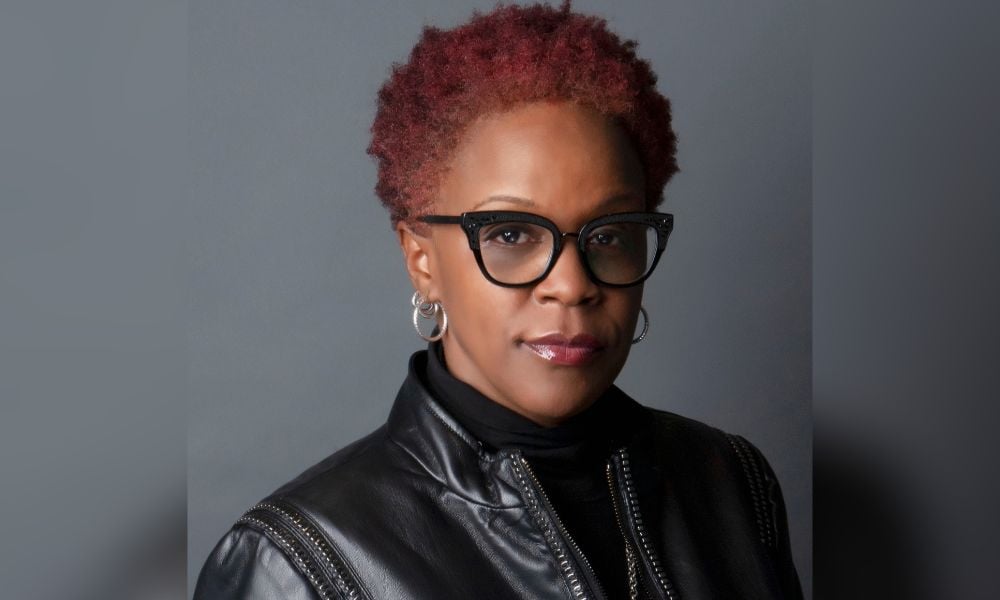
Law firm culture is not built through all-hands meetings, values statements, or off-site retreats. It is built – or broken – by how leaders behave when the pressure is on, says Laura Williams, Managing Partner of Williams HR Law LLP and CEO of Williams HR Consulting Inc.
"If you're focused on fostering the conditions for a high-performance team, culture is everything," says Williams, who has spent more than 30 years in the legal and consulting fields and built two firms from the ground up.
Williams sat down with Canadian Lawyer ahead of the Canadian Legal Summit on October 14 at The Carlu in Toronto, where she will take part in the closing fireside chat on building competitive advantage through leadership and culture. Her message to managing partners is direct: good intentions expressed on paper are not enough.
The law firm culture problem
Law firms face structural cultural pressures distinct from those in other professional services environments, Williams argues. Regulated professionals working under intense client demand – with the weight of getting things right in high-stakes matters – create conditions in which pressure is constant, and leadership is perpetually tested.
"When humans are under high pressure, they don't behave the best," she says. "And so law firms have to be particularly intentional [about] what type of culture they need to foster for the professionals to thrive."
The result, in many cases, is a gap between the culture a firm advertises and the one it actually delivers. Williams has seen firms issue value statements with no corresponding behaviour attached.
"Sometimes organizations and law firms fall prey to this, where they come up with these lofty value statements – this is who we are, and they're not," she says.
The problem compounds when senior partners, who simultaneously generate work and set the cultural tone, are not held to the same standards they publicly espouse. Without that alignment, leaders lose credibility and the trust of the teams around them erodes.
There is also a timing issue that managing partners in larger firms know well: leadership terms are finite, and the incoming partner who wants to shift a firm's culture has to move quickly from aspiration to action. Williams's starting point is consistency between what a firm says and what its leaders do.
When 'rock star bullies' are protected
One of the most persistent cultural threats in law firms, Williams says, is the tolerance of misconduct from high-revenue partners. She invokes a term she has encountered repeatedly in her advisory work – “rock star bullies.”
"They berate, they may bully some of their colleagues, and they get away with it because they churn out the numbers," she says.
Addressing this pattern requires more than a policy update. It requires functional complaints escalation mechanisms that associates feel genuinely safe using – a distinction Williams treats as foundational.
"If you don't ensure that individuals feel safe to raise issues, there's going to be so many issues that are going to hamper the performance of the firm at large [and] the client service that ultimately is delivered," she says.
Her firm conducts workplace investigations, and she says her team has handled complaints against law firm partners who were ultimately held accountable – evidence, she argues, that accountability at the senior level is achievable when firms commit to it.
She also pushes back against the framing of emotional intelligence and compassionate leadership as secondary concerns.
"People like to talk about soft skills – having that kind of emotional intelligence when you're leading, being a compassionate leader... Those aren't soft skills. They're essential skills these days," she says.
Inclusive leadership is about unlocking contribution
Williams offers a definition of inclusive leadership specific to the law firm context, and it is less about demographics than about conditions for performance.
"To me, inclusive leadership really is unlocking contribution – allowing people to bring what they have to bring to a file," she says.
She has seen senior lawyers shut junior associates out of files after an initial contribution they were dissatisfied with – a pattern she says is both short-sighted and self-defeating.
"That lawyer loses the development opportunity, and the matter, the file loses the opportunity of maybe having somebody that could have brought some different insights," she says.
Trust, she adds, is a prerequisite for that kind of contribution, and building it requires a patience that many law firm leaders underestimate.
"Trust comes from investing in associates, investing in your employees, in their development and their growth," Williams says.
She uses a running metaphor for the lawyers who are slower to emerge but often the most capable: "People that will win the race... they raise their head, and then all of a sudden they're off to break the tape."
The biggest mistake managing partners make
With more than 16 years running her own firms, and years of guiding others through culture recovery, Williams has a consistent read on what goes wrong – and her answer is specific.
She says one of the most damaging patterns she has seen inside law firms is senior leaders speaking disparagingly about clients the moment a call ends.
"As soon as they hang up, they're trashing the client. That type of hypocrisy... can create... mistrust of the leadership," she says.
The damage is acute for junior lawyers, who enter the profession wanting to help – and instead encounter cynicism modelled from above.
"They're seeing that there's this jadedness that can really impact culture," she says.
It is a habit she eliminated from her own firms from the outset – not as a culture initiative, but because "that's bad business karma."
This article is based on an episode of CL Talk, which can also be found here:
The episode is also available on our CL Talk podcast homepage, which includes links to follow CL Talk on all major podcast platforms.