

The appellate ruling upholds a 2025 ruling by the BC Supreme Court
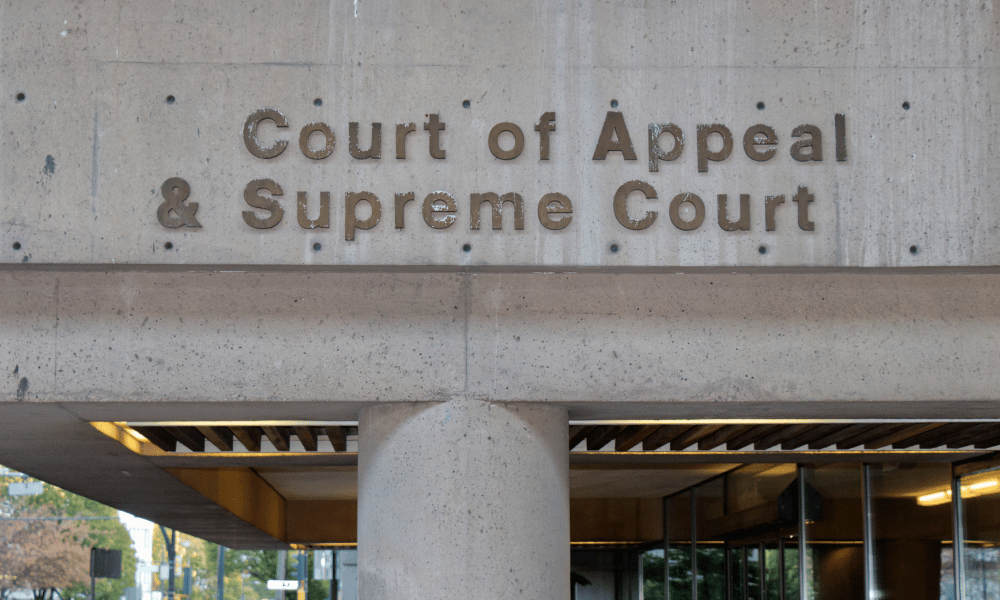
The British Columbia Court of Appeal has ruled that a lawsuit alleging Cadillac Fairview was collecting shoppers’ biometric data at its shopping malls cannot proceed as a class action, ruling that the plaintiffs have failed to explain why a class proceeding would be the best way to resolve their concerns.
In its Aug. 21 decision in Cleaver v. The Cadillac Fairview Corporation Limited, the BCCA found the plaintiffs had also failed to prove that there was an identifiable class of two or more people, or that the claims of its proposed class raised common issues.
As a result of these failures, the plaintiffs cannot meet three of the five mandatory requirements for certifying a class action under BC’s Class Proceedings Act. All five requirements must be satisfied for certification to proceed.
The ruling upholds a decision last year by the BC Supreme Court, which opted not to certify the proposed class action.
Writing on behalf of a three-justice panel, BCCA Justice Andrew Mayer said in the Aug. 21 rulings that the lower court had given “cogent reasons… for finding that a class proceeding would not be efficient from a judicial economy perspective.”
Mayer added that the BC Supreme Court’s reasons appear “unassailable.”
“It is not apparent that any damage has been occasioned by the respondents’ conduct, or that there will be any systemic or social benefit to pursuing a class proceeding,” Mayer said. The lower court’s “reasons provide a sound basis for the conclusion that a class proceeding is not proportional to the matters in issue.”
The case dates back to 2018, when Cadillac Fairview launched a pilot project at some of the busiest shopping malls in its portfolio, including but not limited to Toronto Eaton Centre, Pacific Centre in Vancouver, Chinook Centre in Calgary, Carrefour Laval, and Polo Park in Winnipeg.
The goal of the pilot project was to get an estimate of the number, age, and gender of visitors coming to its shopping malls by using cameras installed in mall directories. The cameras were equipped with video analytics software, which detected human faces and converted each image of a face into a string of numbers.
According to the BCCA, none of the images of faces were retained and neither Cadillac Fairview nor the shopping malls involved in the pilot project ever received or used the collected data. The pilot project lasted eight weeks, ending after media reports and information circulating online suggested the project involved facial recognition software.
Later that year, the privacy commissioners of Canada, Alberta, and BC launched a joint investigation into the pilot project. In October 2020, they determined the video analytics software had collected “personal information” within the meaning of their respective privacy statutes. This included shoppers’ biometric data, location, and timestamps. However, the privacy commissioners did not take further steps to penalize Cadillac Fairview because the company had already disabled the software and deleted the data.
A month later, the plaintiffs filed their proposed class action against Cadillac Fairview and the malls that participated in the pilot project, alleging privacy breaches, various violations of Quebec law, and claims of intrusion upon seclusion, negligence, and unjust enrichment.
In its 2025 ruling, the BC Supreme Court declined to certify the case based on the plaintiffs inability to meet three of the five certification requirements under the Class Proceedings Act. The lower court found that the plaintiffs failed to prove that at least two persons could self identify as class members, which was defined as anyone who had viewed one of the mall directories that participated in the pilot project.
The BC Supreme Court also concluded that the plaintiffs could not prove that any facial images were recorded by the mall directory cameras, or that any biometric or personal information about potential class members was created. Finally, the lower court said the plaintiffs had not established that a class proceeding was the preferable method for resolving their claims.
The plaintiffs challenged the lower court’s certification ruling, but the BCCA tossed out their appeal. In the BCCA’s ruling, Mayer noted that the plaintiffs had declined to appeal the lower court’s finding that they had not proved a class action was the best means of resolving the case. Because the Class Proceedings Act requires all five certification criteria to be met, Mayer, the plaintiffs’ failure to address one prong of the test means the class cannot be certified.
Mayer noted, however, that “the problem is not merely a technical one.”
“It is apparent that the appellants’ failure to challenge the determination on preferability was not inadvertent,” he wrote, adding that the BC Supreme Court had detailed many reasons why a class action didn’t make sense for the plaintiffs’ claims.
In a statement on Monday, Theodore Charney of Charney Lawyers PC, one of the lawyers who represented the plaintiffs, did not comment on the BCCA’s decision not to certify the proposed class action. However, he noted that the appellate court appeared to consider the federal and provincial privacy commissioners’ report on the pilot project as part of its analysis. The BC Supreme Court had previously ruled that the report was admissible as evidence, but not for the truth of its contents.
The Office of the Privacy Commissioner of Canada “conducts reviews and delivers reports into privacy related matters and it is important these reports are admissible in class proceedings,” Charney said.
Kirsten Thompson, one of the lawyers at Dentons who represented Cadillac Fairview, said, We and the Cadillac Fairview Corporation Limited are pleased that the Court of Appeal clearly understood the issues and dismissed the appeal.
“As we and our client have maintained from the beginning, there is simply no basis in fact that any facial images or biometric and personal information was recorded [by] Cadillac Fairview,” Thompson added.


