

A split ruling on Friday introduces a three-step test for reconciling the two requirements under criminal law
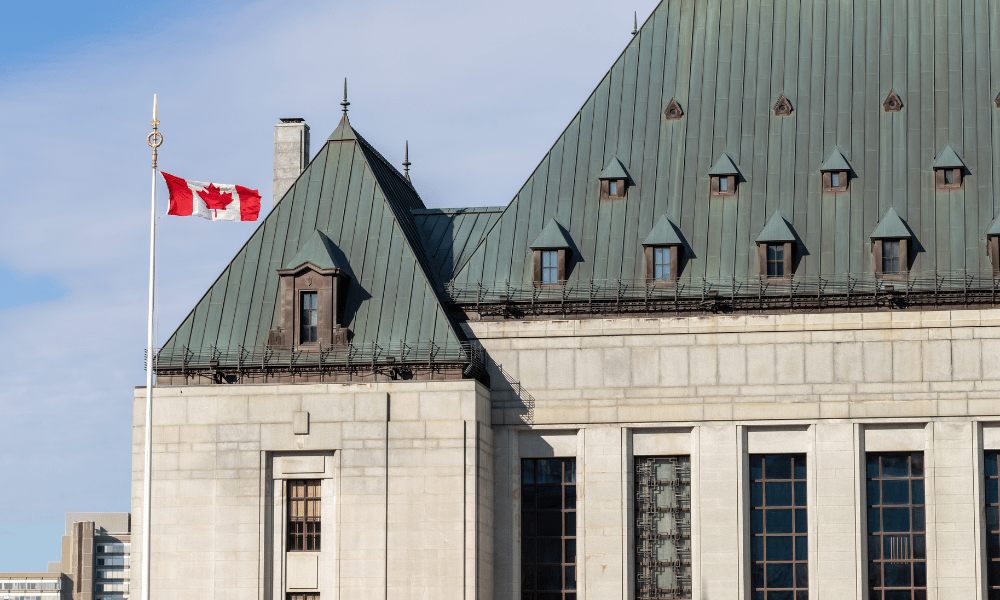
Courts must apply a three-step test when balancing Canada’s criminal law requirements to consider the disproportionate incarceration of Indigenous peoples with the fact that Indigenous women and girls experience high rates of violence, the Supreme Court of Canada ruled in a 5-4 decision on Friday.
R. v. Cope represents the first time the high court has laid out the test, which aims to reconcile the Criminal Code’s approaches to what SCC Justice Michelle O’Bonsawin called “two intertwined social crises.” Writing for the majority, O’Bonsawin said the excessive imprisonment of Indigenous individuals and the abuse suffered by Indigenous women and girls are two issues shaped by the experiences of colonization.
“Addressing them together is central to the ongoing process of reconciliation,” the justice wrote.
Friday’s ruling also clarified that it is not a legal error per se when a sentencing judge fails to meaningfully consider the recommendations resulting from a sentencing circle – a process in which members of the affected Indigenous community, the offender, lawyers, and the sentencing judge come together to discuss an appropriate sentence.
However, this error could amount to a failure to properly conduct the second step of the sentencing analysis set out in the SCC’s 1999 decision in R v. Gladue, which requires sentencing judges to consider sanctions and sentencing procedures that would be appropriate given the offender’s Indigenous background.
Gladue was a landmark decision in Canadian criminal law. It requires sentencing judges to consider the aspects of an Indigenous offender’s background that stem from their position as an Indigenous person in Canada – like their experiences with dislocation, discrimination, substance abuse, high unemployment rates, or community fragmentation – when crafting a criminal sentence. The landmark decision clarified how courts should apply s. 718.2(e) of the Criminal Code, which came into force in 1996 to address the overrepresentation of Indigenous people in Canadian prisons.
The high court’s ruling in R. v. Cope upholds a previous decision by the Nova Scotia Court of Appeal, which reduced the sentence of a Mi’kmaw man with severe mental health challenges from five to three years in prison after he violently attacked his partner, a Mi’kmaw woman.
SCC Chief Justice Richard Wagner and justices Malcolm Rowe, Mahmud Jamal, and Suzanne Côté dissented, stating they agreed with the original five-year sentence.
Jonathan Rudin, one of the lawyers who represented Cope, told Canadian Lawyer on Friday that there has long been confusion among lawyers and judges over how to balance Gladue with other provisions in the Criminal Code that aim to provide justice to Indigenous female victims of abuse and violence, with some wondering whether one cancelled out the others.
The high court’s new three-part test “helps people understand that this isn’t a contest between the Indigenous victim on the one hand and the Indigenous offender on the other hand,” Rudin says. “It’s not a battle.”
In a statement, Nova Scotia Public Prosecution Service spokesperson Melissa Noonan agreed that the SCC has provided important guidance on the issue.
“The Crown’s position was not that Gladue should be diminished or that the safety of Indigenous women and the fair sentencing of Indigenous offenders are competing objectives,” Noonan said. “Both must be meaningfully considered, including the important role that sentencing circles and Indigenous-led approaches can play in the sentencing process.”
Noonan said the three-step test “requires judges to consider the circumstances of both the victim and the offender and to give primary consideration to denunciation and deterrence while considering other relevant sentencing objectives.” She added that while the high court dismissed the Crown’s appeal, the Public Prosecution Service respects the ruling and plans to apply it in future cases.
The Provincial Court and Court of Appeal rulings
The case dates back to 2021, when Harry Arthur Cope repeatedly punched his partner and threw her to the ground in Halifax. The attack left the victim with a broken bone in her face, a possible break in her breastbone, blood pooled under the skin of her breastbone, and a swollen eye.
Cope is a Mi’kmaw man and a member of Millbrook First Nation. According to the SCC, Cope had a volatile childhood: his father struggled with alcoholism and was violent towards his mother. After his mother left his father, his father kidnapped Cope for six months and later gave him his first opioid painkiller when he was only 10. Cope began abusing prescription drugs and has been repeatedly convicted and served sentences for petty thefts and robberies.
The SCC noted that Cope has been involved with mental health services since at least 2007. While in custody for robbery charges in 2016, a psychiatrist at a psychiatric hospital described him as being in “a floridly psychotic state.”
The victim is a Mi’kmaw woman from the Sipekne’katik First Nation, and had an on-and-off relationship with Cope. They have a child together.
To determine Cope’s sentence, the Provincial Court of Nova Scotia ordered an Indigenous background report – also known as a Gladue report – which provided information about Cope’s personal history and the impact of colonialism and other systemic factors on his life. The court also ordered a sentencing circle, which led to recommendations from community members that Cope undertake a “holistic approach” to addressing his conduct, including completing inpatient treatment at a Mi’kmaw healing centre.
While the Crown sought a five or six-year sentence for Cope and Cope’s counsel sought a sentence of less than two years, the community argued a longer prison sentence would not help Cope given his mental illness.
The court sentenced Cope to five years in prison. However, O’Bonsawin noted, the sentencing judge did not directly refer to the sentencing circle process in her order, only noting that Cope’s “community doesn’t recommend any further jail time.”
Cope appealed his sentence to the Nova Scotia Court of Appeal. In a split decision, the appellate court reduced his sentence to three years, ruling that the Provincial Court had failed to sufficiently consider the connection between Cope’s mental illness, substance use, and Indigenous background in determining how responsible he was for his conduct.
The three-part test
In 2019, Parliament added ss. 718.04 and 718.201 to the Criminal Code to address violence against vulnerable victims, particularly Indigenous women and girls.
Under s. 718.04, courts imposing sentences for offences that involve the abuse of a vulnerable person must “give primary consideration” to the goal of deterring and denouncing the offender’s conduct. The provision states that being Aboriginal and female contributes to a victim’s vulnerability.
S. 718.201, meanwhile, requires sentencing judges to consider the increased vulnerability of female victims, particularly if they are Aboriginal.
Like Rudin, Maija Martin, lead counsel at Martin Barristers, says reconciling these provisions with s. 718.2(e), which aims to correct the overrepresentation of Indigenous people in Canada’s prisons, has long been a confusing task for lawyers and the courts. The three provisions “previously were thought to be working in conflict,” she says. Martin represented the Criminal Lawyers’ Association, one of 21 intervenors in the case.
O’Bonsawin explained that to weave the three provisions together, courts must apply a three-step test: assessing the gravity of the offence and the offender’s degree of responsibility given the Indigeneity of both the offender and the victim; “sensitively” identifying the relevant criminal sentencing objectives, giving primary consideration to the goals of denunciation and deterrence; and choosing the proportionate and just sentence in light of the Indigenous context.
In Cope’s case, the sentencing judge failed to consider the connection between Cope’s mental health challenges and achieving the relevant sentencing objectives, which include but are not limited to deterrence and denunciation, O’Bonsawin wrote.
The sentencing judge’s “reasons disclose no consideration of how a lengthy custodial sentence of imprisonment could aggravate the respondent’s mental illness and thereby lessen prospects for rehabilitation and specific deterrence,” O’Bonsawin added.
Martin says the test clarifies that in cases where both the offender and the victim are Indigenous, “those two contextual factors don't necessarily pull in different directions.”
It would be an “oversimplification to say that the sentence should be longer or shorter” based on one of these two factors, Martin adds. “It does need to continue to be a contextual analysis.”
Rudin agreed that the SCC’s decision makes clear that sentencing judges “still are required to… engage in a proportionate sentencing decision for an Indigenous offender.”
He adds that the court also clarified that prison time is not always necessary to denounce or deter criminal conduct.
“The court emphasized that while deterrence and denunciation are important, those are not synonyms for jail,” Rudin says. “You can deter someone without the use of jail. And in fact, the court went out of its way to point out that Indigenous people continue to make up a disproportionate percentage of the jail population and that that has not led to safer communities, and so we need to think more creatively about how you deter and denounce behavior.”


