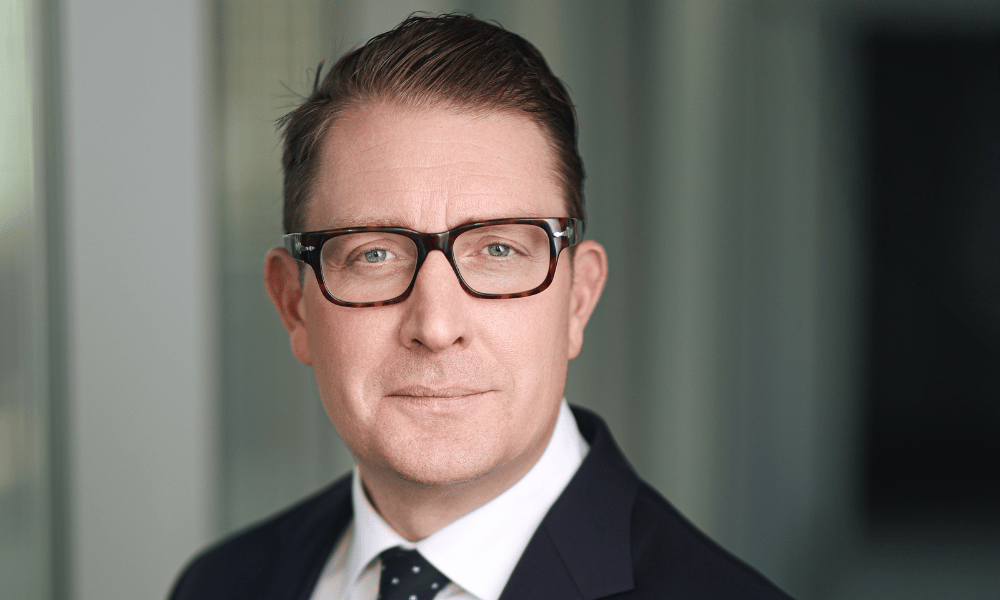
Rice Parsons Leoni & Elliott LLP partner John Rice breaks down the limits of remedies available in BC
In March, one month after a teenager in Tumbler Ridge, British Columbia shot and killed eight people at her home and former high school before fatally shooting herself, one of the many surviving students injured in the attack sued OpenAI along with her mother and sister.
Filed in BC Supreme Court, the lawsuit explained that 12-year-old Maya Gebala had been shot three times at close range, “with one bullet entering her head above her left eye, a second striking her neck, and the third grazing her cheek and earlobe.” The shooting had left Gebala with a traumatic brain injury, permanent cognitive and physical disabilities, paralysis on one side of her body, scarring, depression, and anxiety.
Detailing how the shooter had relied on ChatGPT as a “pseudo-therapist” to which she had repeatedly described scenarios involving gun violence in the weeks leading up to her attack, Gebala, her sister, and her mother accused OpenAI of negligence, arguing the San Francisco-based tech company prioritized user engagement over safety, prematurely released the chatbot without sufficient safety testing, and failed to report the shooter’s activity to law enforcement.
The plaintiffs soon withdrew their lawsuit from the BC trial court. In April, their lawyers at Vancouver firm Rice Parsons Leoni & Elliott LLP announced they had teamed up with Edelson PC – a US plaintiffs’ firm with a longstanding reputation of taking on Big Tech – to represent Gebala and her family, as well as the families of other Tumbler Ridge victims, in seven separate lawsuits against OpenAI and CEO Sam Altman. The firms filed the lawsuits in the Northern District of California, the federal US court whose jurisdiction includes San Francisco, and have indicated they plan to file over two dozen more.
In July, BC Attorney General Niki Sharma announced the province had also retained both BC and California-based legal counsel to pursue legal action against OpenAI. Alleging the company had failed to notify law enforcement about the shooter’s ChatGPT activity, the province said it would work with Vancouver firm CFM Lawyers and California firm Stranch, Jennings & Garvey to “explore all legal avenues to hold OpenAI and its decision-makers accountable.” The province noted that retaining California-based lawyers will allow it to explore remedies in the jurisdiction where OpenAI is headquartered.
These developments raise the question: Why are BC plaintiffs, who are seeking remedies for a tragedy that took place in BC, opting to sue OpenAI in California rather than in courts back home? To answer this question, Canadian Lawyer talked to John Rice, one of the partners at Rice Parsons Leoni & Elliott LLP representing the Tumbler Ridge victims and their families.
Below, Rice breaks down the remedies available to the plaintiffs in BC versus California, including the different laws and caps on damages. For the lawyer, weighing the differences leads to one clear conclusion: “The damages that we can recover for folks in Canada, in British Columbia… are massively dwarfed by the opportunity for damages available in California. Period.”
BC’s wrongful death remedies are more limited than California’s
When a person dies because of another party’s negligence, recklessness, or misconduct, certain family members of that person – spouses, parents, children – can typically seek compensation by filing a wrongful death claim. In BC, this remedy is available under the Family Compensation Act, which aims to ensure that the financial position of a claimant does not change due to their family member’s death.
Examples of damages that are available under the statute include those that reimburse claimants for the financial support their family member would have provided if they hadn’t died, or medical expenses that claimants incurred before their loved one’s death.
The Family Compensation Act has been criticized for its limited scope. According to the BC Wrongful Death Law Reform Society, an organization pushing to reform BC’s wrongful death laws, the statute’s focus on reimbursing claimants for lost financial support effectively means that claimants are only entitled to damages if their deceased family members were breadwinners. This makes it difficult for family members to recover damages under the statute for the deaths of children, seniors, or people with disabilities who did not financially contribute to their households.
Rice’s clients include the family members of children who died in the Tumbler Ridge shooting.
When it comes to recovering damages for parents “for the death of a child in British Columbia, there’s almost nothing that you can recover under the [Family Compensation Act],” Rice says. He notes that a broader range of damages is available to parents when a child is grievously injured.
In California, claimants in wrongful death cases can pursue non-economic damages – including compensation for loss of love and companionship – in addition to economic ones.
Damages for pain and suffering are capped in Canada
Rice argues the scope of damages available in BC to Gebala, who survived the shooting but was severely injured, is also limited. Claimants can typically expect to recover less in damages for pain and suffering in BC, for example, than they would in California.
In the 1970s, the Supreme Court of Canada published decisions in Andrews v. Grand & Toy Alberta Ltd., Arnold v. Teno, and Thornton v. Prince George School District No. 57, establishing what became known as the “damages trilogy.” The three cases effectively put a cap of $100,000 on damages for pain and suffering in Canada. Adjusted for inflation, that figure is roughly $475,000 as of July 2026 – even for a claimant who suffered a “catastrophic injury” like Gebala, Rice says.
Pain and suffering damages are designed to compensate claimants for intangible losses, such as emotional distress.
There is generally no cap on pain and suffering damages in California, except in medical malpractice cases, which cap pain and suffering damages at US$250,000.
‘Extremely modest’ punitive damages awards scheme in Canada
The purpose of punitive damages is to penalize a defendant for their misconduct, and to deter them and others from engaging in the same misconduct in the future. In Canada to date, the largest punitive damages award for a civil claim is $1.5 million.
In the US, punitive damages have historically run into the billions.
Rice noted that OpenAI has raised over $100 billion in its most recent funding round. “Even if in Maya’s case, I were able to recover a punitive damages award of 10 times an amount larger than the largest award in Canadian history, that would only be CA$15 million,” Rice says.
This would “not serve the object and purpose of punitive damages, which is to punish the corporate bad actor by [requiring them to pay] money, expressing society’s condemnation, and deterring other corporate actors from similar malfeasance,” he adds.
Rice contends the vast difference between the damages available in Canada versus the US might boil down to other differences between the two countries, like Canada’s universal healthcare system. Unrestricted claims for damages, when pursued against public bodies, “could impact the public purse,” Rice says, adding, “there is a balancing there that might not feature as prominently in the United States.”
Still, he argues the judiciary needs to adjust its historically conservative approach to punitive damages so that they more effectively deter corporate bad actors.
“If the law remains as it is, I think whenever possible, you’ll see Canadians who are harmed by American corporate entities… seeking civil remedies in the United States, simply because the type of compensation and damages that are available to us in the United States so massively dwarf what we can recover in Canada,” he says.