Ryle will serve a seven-year term in the new role starting July 2
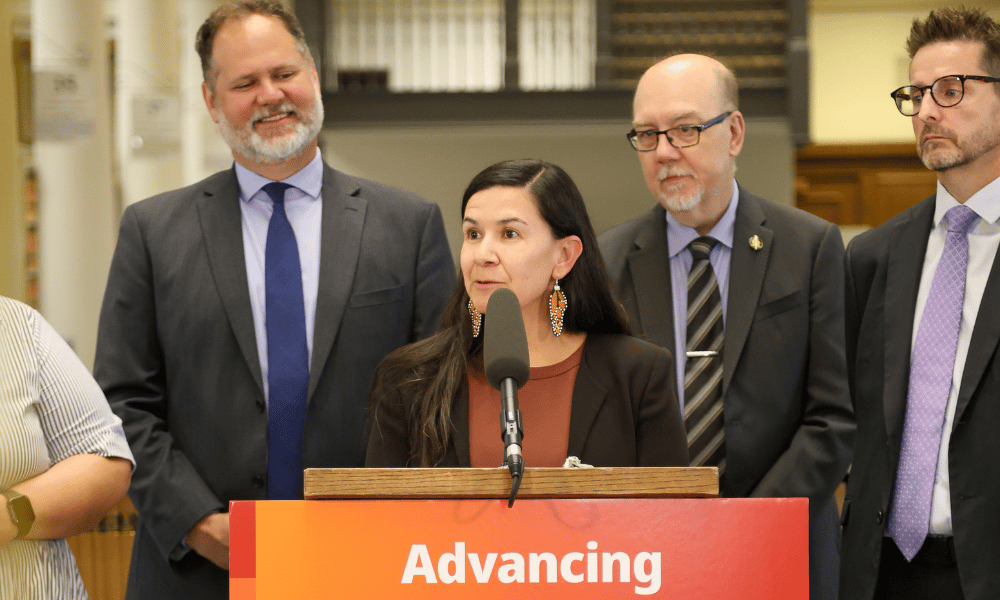
Manitoba has named provincial court judge Jerilee Ryle the province’s first associate chief judge of reconciliation, spearheading efforts to enhance relationships with Indigenous nations.
Ryle will serve a seven-year term in the new position starting July 2. She will be the fourth associate chief judge in Manitoba.
According to a statement by justice minister Matt Wiebe, the establishment of the post marked “a historic step toward building a court system that better reflects and respects Indigenous traditions, values and lived experiences.” Wiebe consulted with Manitoba provincial court chief judge Ryan Rolston on the associate chief judge of reconciliation appointment; Rolston called for expressions of interest from the court and presented recommendations as per Provincial Court Act requirements.
“Indigenous people continue to be significantly overrepresented in our justice system, and we know real progress requires listening, partnership and sustained leadership. This new role will help strengthen relationships with Indigenous nations, ensure Indigenous perspectives are reflected in court administration and support meaningful, long-term change in how justice is delivered in Manitoba,” Wiebe said in the statement.
The justice minister confirmed that Ryle will oversee the work on this development. Ryle began sitting as a provincial court judge on May 1, 2025 after stints as a defence lawyer, senior Crown attorney, and Manitoba Prosecution Service reconciliation lead. She has tackled cases involving drug and firearm offences as well as domestic and sexual violence crimes.
She is Anishinaabe, from Lake St. Martin First Nation and has advocated for equity, diversity, and inclusion.
“Judge Ryle brings deep experience and strong leadership to this role, along with a clear commitment to advancing reconciliation in our justice system. As the first associate chief judge of reconciliation, she will play a key role in strengthening relationships with Indigenous nations and ensuring our courts better reflect Indigenous perspectives and values,” Rolston said.
According to The Canadian Press, Ryle will collaborate with First Nations, Inuit, and Métis groups to incorporate their perspectives in the court process. She will also study the operation of circuit courts in Manitoba communities and identify areas where Indigenous legal systems can be better integrated.
Speaking in the Winnipeg law courts building, Ryle said in a statement published by The Canadian Press that she steps into the role with “a clear understanding of the history we are working within, a system that for generations has caused significant harm to Indigenous Peoples.”
“It's quite close to my heart. It is something that I got into law to help Indigenous peoples. Being able to have these opportunities to work alongside and empower Indigenous Peoples and communities, and with the goal of healing Indigenous communities and peoples, is certainly very impactful for me,” she said in a statement published by The Canadian Press.
She expressed hope that other jurisdictions would establish similar roles.
The Assembly of Manitoba Chiefs also praised Ryle’s appointment.
“We are confident she will make a significant contribution to ensuring Manitoba's courts are more responsive, culturally informed and respectful of First Nations perspectives, traditions and lived experiences,” grand chief Kyra Wilson said in a statement published by The Canadian Press.
Per The Canadian Press, Rolston confirmed that an Indigenous courtroom is being constructed at the Winnipeg law courts building, with its function still to be determined. He noted that while a colonial justice system is still necessary, Indigenous practices can be integrated into processes like sentencing.
Associate chief judges preside over Manitoba provincial court matters, support the chief judge in court management, progress judicial education, and develop policy.