

Lawyers expect Canada’s courts to see more deepfake evidence and accusations that real evidence is fake
Since early 2024, when a British Columbia court flagged one of Canada’s first-known cases of a lawyer relying on AI-hallucinated case citations in her arguments, the issue has cropped up in hundreds of cases in courts across the country.
Today, some lawyers argue that another AI-related issue is set to bring trouble to Canada’s courts in the coming years: the proliferation of deepfake evidence, or digital evidence created or manipulated by AI.
And they worry that Canada’s legal regime for evaluating the authenticity of evidence has not kept pace with this impending risk.
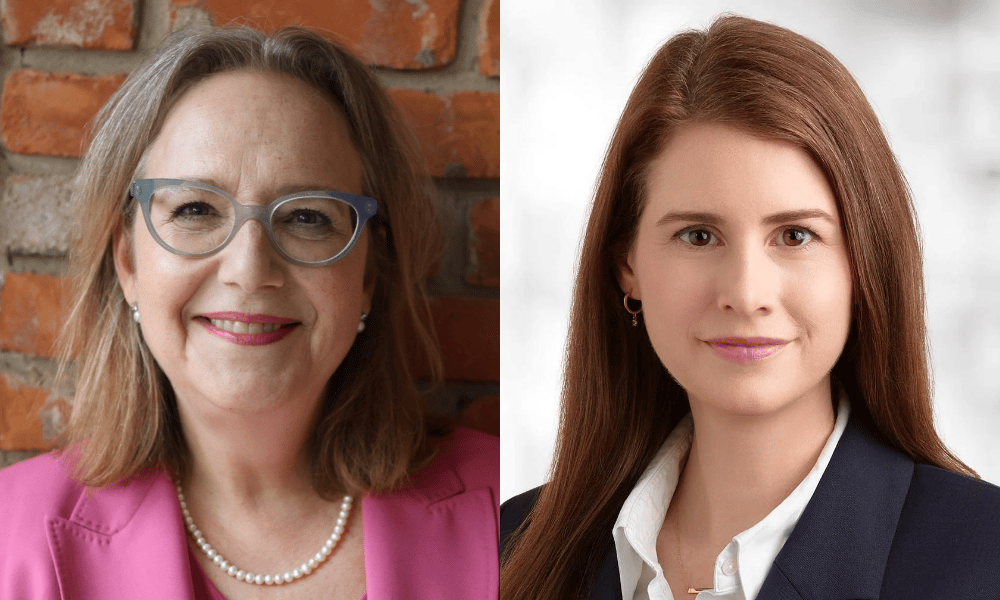
“There haven’t been a lot of cases involving deepfakes yet in Canada,” says Emily Hazlett, a partner at Blake, Cassels & Graydon LLP whose practice focuses on class action defence. “The cases that we have seen have typically been more in the criminal cases, and they’ve typically been… cases having to do with the deepfake defence,” she says, referring to the phenomenon where credible evidence is accused of being fabricated.
But the lawyer argues that the lack of reported cases should not provide “false comfort.”
“Obviously, a successful deepfake is one that’s not going to be detected, so the reported cases don’t really tell us much about deepfakes that have been caught,” Hazlett says.
“I think it’s something that’s more of a growing concern, where the risk is developing much faster than the case law.”
Kelly Friedman, a litigator at Heuristica who specializes in e-discovery, privacy, and data breach issues, agrees that Canada’s laws are ill-equipped to address deepfake-related risks.
“The evidence law as it’s written right now doesn't quite fit the current level of technological expertise out there that we can really fake anything,” she argues.
Existing evidence frameworks are not caught up
To date, there have been no reported civil court rulings in Canada that address the attempted use of deepfake evidence. However, the issue has cropped up south of the border. Last year, a California trial court dismissed a case called Ariel and Maridol Mendones v. Cushman & Wakefield, Inc. after determining that the plaintiffs had submitted evidence – including screenshots and audio and video testimony – that the court suspected had been created or altered by AI. The court’s suspicions were partly raised by the quality of the videos, which depicted individuals who spoke and moved their faces with little expressiveness.
“What’s interesting in that case is that it was the court who was able to tell based on the irregularities in the video that the court raised the concerns about it possibly being a deepfake,” Hazlett says. “But the obvious concern there is that when the technology gets good enough that those red flags are no longer apparent.”
She adds that while courts have always had to deal with forged or manipulated evidence, generative AI has changed “the ease, speed, and potential sophistication with which that evidence can be created.”
Courts currently rely on a patchwork of legal obligations and guidance to assess the authenticity of digital evidence. This patchwork is made up of provincial and federal legislation – including the Canada Evidence Act, which was amended in 2000 to include provisions on assessing electronic evidence – as well as case law, courts’ civil procedure rules, and professional obligations and judicial practice directions.
Both Hazlett and Friedman argue that AI has put significant pressure on these existing tools. As an example, Friedman points to the limits of the Canada Evidence Act. As with many of its provincial counterparts, the federal legislation presumes that electronic evidence is authentic and accurate if it was stored by a system that was operating properly at the relevant time. Friedman argues that it is a standard that many deepfakes can easily clear.
“The question that the court asks at first instance is: is it technically a photograph?” Friedman says. If it is, the court will admit it as evidence and, as a next step, decide whether to give it any weight.
“So what we’ve got is no one’s asking the question: wait a minute, did this underlying event even happen in the first place?” Friedman says. If the admitted evidence is presented to a jury, they could be persuaded that a deepfake photograph is authentic and depicts a real event. “You’ve got this presumption built in that’s not appropriate in our current world where people can falsify everything,” the lawyer argues.
The ‘liar’s dividend’
But Friedman also says the federal legislation introduced this presumption for a reason. At the time the Canada Evidence Act was amended to include electronic evidence provisions, it was “not a deepfake world”; the courts also did not want to be bogged down in the task of scrutinizing every single digital record that came before them.
The issue of how to strike a balance between weeding out inauthentic evidence and using court resources efficiently remains top of mind for the courts.
Hazlett references guidelines issued by the Canadian Judicial Council in mid-October, which provide a framework for the federal judiciary to evaluate digital media evidence. In the guidelines, the CJC argued that one risk AI tools introduced was that more authentic evidence would be challenged as fabricated, calling this phenomenon the “deepfake defence” or the “liar’s dividend.”
“There are really two sides of the same evidentiary problem: that fake evidence could be accepted as real, but there’s also a very real concern that real evidence could be dismissed as fake,” Hazlett says.
But the CJC also “warned of the importance of calibration in this,” Hazlett adds. “Courts need to be open to the possibility or alive to the risk of synthetic evidence and take that seriously. But we also need to be careful not to create a system where every bare allegation of a deep fact fake automatically triggers some sort of costly forensic exercise.”
Friedman anticipates that striking a balance between the two tasks will “be the biggest struggle for the courts in the coming few years.”
“It’s going to be this issue of how to deal with deepfakes – what kind of evidence to require people to proffer in the first instance when they put forward a video, a photograph, an audio recording, and what the other party is entitled to have to test it,” she says.
Provenance is more important than ever
Both lawyers argue that navigating these tasks will require more focus on each digital file’s so-called chain of custody – where the file originated and what happened to it over its lifetime.
“The general rules of provenance of evidence matter more than ever,” Hazlett says. “Where we have important audio, video, or photographic evidence, we need to be considering questions like, where does this file come from? Has the original been preserved? What metadata exists? Who’s had custody of the file? Is there independent corroboration?”
Friedman argues, “We need metadata.”
“Electronic evidence law [needs to start] adapting to the world that we’re in now and answer the question, is the underlying event even real?” she adds. Right now, “the only way we can get at that [is] with some kind of comprehensive deepfake-specific authentication doctrine that looks at provenance, not just content.”