The session will be SCC Justice Glenn Joyal’s first since he joined the high court this summer
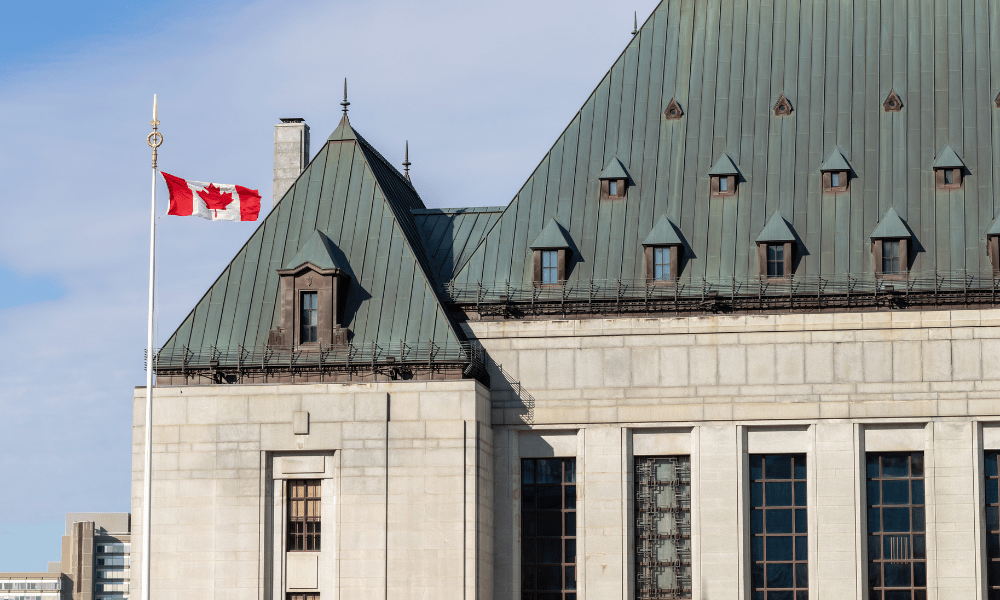
The Supreme Court of Canada will hear arguments in 31 cases during its fall session – more than double the number of cases the high court heard this spring.
The session, which largely focuses on civil cases, will be SCC Justice Glenn Joyal’s first since he joined the high court in July. The hearings will be held in the SCC's temporary location in Ottawa while its historic courthouse undergoes a decade-long renovation.
Below, we look at some of the most significant cases from the session.
NHK Spring Co., Ltd., et al. v. Tony Cheung, et al.
On Oct. 8, the SCC will consider whether British Columbia’s courts have jurisdiction over a class action lawsuit that argues Canadian consumers were harmed by an alleged price-fixing scheme that inflated the price of suspension assemblies, a type of computer hard-drive component. The reason the case may have broad implications? The manufacturers, which are headquartered in Japan, allegedly made and implemented the price-fixing agreements entirely outside of Canada.
In 2022, the BC Supreme Court certified a national class proceeding, folding in similar lawsuits filed in Ontario and Quebec. The BC Court of Appeal upheld the decision in 2024, and the manufacturers appealed the appellate court’s ruling to the SCC.
The key question before the SCC is whether Canadian courts have the authority to rule on competition cases arising from events that occurred outside the country. There are eight intervenors in the case.
Durrell Diggs, et al. v. Attorney General of Nova Scotia, et al.
Durrell Diggs boasts 15 intervenors – the second-highest of all the cases that will be heard during the fall session. The SCC will hear arguments in the case on Oct. 13.
The case stems from separate habeas corpus applications filed by two inmates at the Central Nova Scotia Correctional Facility after they were subjected to rotational lockdowns in 2023. At the time, the facility did not have enough employees to safely release all inmates from their cells together to access common areas, in accordance with the facility’s usual practice. Instead, employees released smaller groups of inmates in shifts, resulting in inmates spending more time locked in their cells than usual.
In 2024, the Supreme Court of Nova Scotia ruled that the lockdowns of the two inmates were unlawful and deprived them of their liberty. The following year, however, the Nova Scotia Court of Appeal said the lower court had exceeded its jurisdiction by using a habeas corpus proceeding – which inmates can use to challenge the lawfulness of their confinement – to review the correctional facility’s operational decisions.
The appellate court set aside the lower court's ruling, stating that challenges to the facility’s operations should be addressed through other avenues, such as a Charter lawsuit. The inmates appealed this decision to the SCC.
Intervenors include the attorneys general of Canada, Ontario, BC, and Saskatchewan; the Canadian Civil Liberties Association; organizations representing inmates' interests; and others.
Ontario Place Protectors v. His Majesty the King in Right of Ontario and Attorney General of Ontario
In 2023, shortly after a grassroots organization filed a lawsuit alleging that the Ontario government had failed to conduct a required environmental assessment for its redevelopment of Ontario Place, the government passed a law exempting the project from various obligations, including those related to environmental assessments and noise regulations. The legislation, the Rebuilding Ontario Place Act, also bars any lawsuits against the Crown and its agents arising from the project.
Another group, the Ontario Place Protectors, challenged the legislation in court. The group argued that the law is unconstitutional and should be “declared a breach of public trust” for exempting the Ontario Place project from various laws and judicial scrutiny.
The Ontario Superior Court of Justice dismissed the group’s lawsuit. The Ontario Court of Appeal upheld that decision. Appealing to the SCC, Ontario Place Protectors argues the case raises two questions “of both public and national importance”: whether the Ontario legislation infringes “on the core jurisdiction granted to superior courts under s. 96 of the Constitution Act, 1867,” and whether it breaches “the doctrine of public trust.”
There are 19 intervenors in the case, including the City of Toronto. The SCC will hear arguments in the case on Oct. 15.
Christine Generoux, et al. v. Attorney General of Canada, Canadian Coalition for Firearm Rights, et al. v. Attorney General of Canada, Michael John Doherty, et al. v. Attorney General of Canada, and Jennifer Eichenberg, et al. v. Attorney General of Canada
In 2020, the federal government introduced regulations under the Criminal Code that effectively banned more than 1,500 firearms that were previously legal to own and use. In response, licensed firearm owners, hunters, sport shooters, business owners, shooting clubs, and a gun rights organization challenged the regulations in court.
The Federal Court heard their applications together and dismissed them. Four of the cases were heard together by the Federal Court of Appeal, which dismissed the cases again.
Appealing to the SCC, the four applicants argue that the regulations are unconstitutional and conflict with the Criminal Code and other federal and provincial laws.
“The matter we ask Canada’s Supreme Judicial authority to consider extends beyond firearms prohibitions or administrative reviews of regulations,” the applicants told the SCC in their appeal application. “The issues in question affect the basic legal and social fabric of this land; Parliamentary sovereignty, Constitutionalism, our cultural identity and continuity and the rule of law.”
There are 11 intervenors in the case. The high court will hear arguments in the case on Nov. 9 and 10.