

A convicted killer enrolled in law school on day parole – the institution had no policy, no process, and no plan
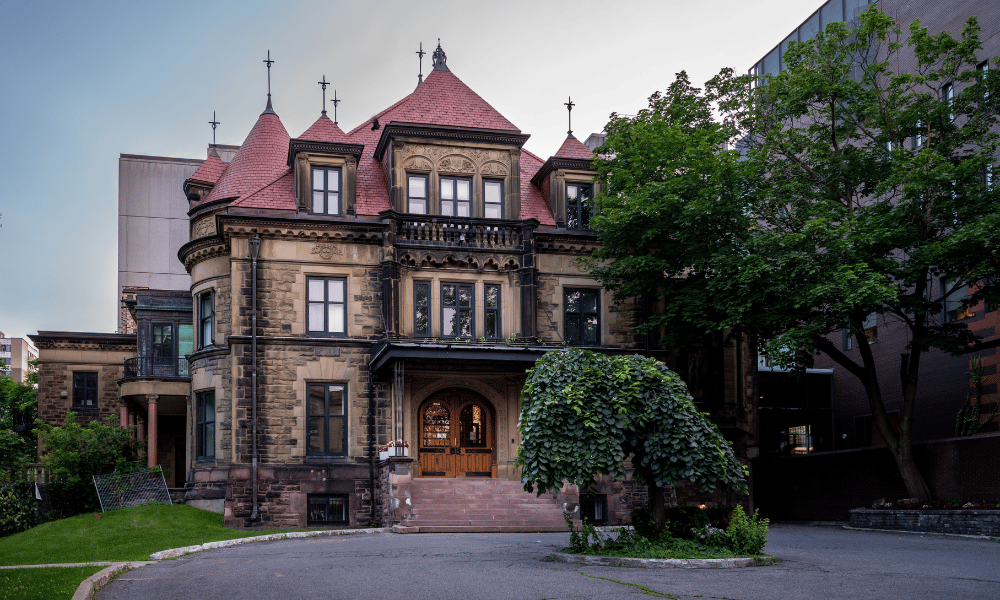

When word got out that a convicted killer was sitting in first-year law classes at McGill University, everyone knew exactly what to think. Within weeks, there were duelling petitions, death threats against a classmate who had befriended him, and a memo from the provost that said almost nothing.
Everyone had a hot take. Here's mine: when the justice system releases someone into the community, we should do everything possible to support their reintegration and rehabilitation, including universities. Inclusion should be the default. The call on risk belongs to the Parole Board. And any institution that decides otherwise owes everyone a fair process and an honest explanation.
Let's start with the people too often left out of the story. In 1984, Ewert choked a 19-year-old woman unconscious, sexually assaulted her and left her in the Fraser River, where she was found dead. Six weeks later, he strangled a 15-year-old girl and left her in a drainage ditch. She survived, paralyzed for life with severe brain damage. Ewert spent roughly 40 years in prison and is still serving a life sentence. As Robyn Urback pointed out in The Globe and Mail, there's no parole for his victims. She's right about that.
Ewert got day parole in 2025. He was reprimanded for collecting women's phone numbers and browsing a dating site without telling his case management team. The board extended his release anyway, with tighter conditions. By late October, his parole had been suspended, and he was back in custody.
Here's a test I keep coming back to. Would we let a man convicted of a serious violent crime work as a janitor at McGill? Drive a bus? Wait tables? If the answer is never, then whatever we're talking about, it isn't rehabilitation anymore. It's exile.
There is a benefit to engaging and reintegrating people convicted of crimes, even serious crimes. Some of this country's most valuable justice advocacy has come from people who have done time. Tona Mills, who spent most of a decade in federal solitary confinement, is a big reason the Senate passed Tona's Law, a bill I testified on that would put solitary confinement under court oversight. Ewert himself fought a 2018 Supreme Court case to force Correctional Service Canada to confront risk tools that had never been validated for Indigenous offenders. We spend decades telling prisoners to get an education and rebuild their lives. It's a bit rich to lock the university doors when one of them actually tries.
Deciding who can safely be released is the Parole Board's job. Sure, the board isn't perfect. Ask any defence lawyer. But parole boards have an offender's file, the assessments, and the mandate to safeguard community safety. Universities and employers should trust its decisions, not relitigate them every time there's a news story. And in this case, the system did what it's supposed to do. When concerns mounted, Ewert’s release was suspended.
Which brings us back to McGill.
Oddly enough, the students on both sides seem to agree that the university blew it. The petition for his return objected to a ban imposed without any conversation and without a finding of misconduct. The students who wanted him gone asked for a committee first to build a framework. Two camps that agreed on almost nothing, but both wanted a process.
McGill's stated reason, according to Ewert’s lawyer, was an alleged failure to disclose parts of a parole decision on his application. That's an odd ground. Four other Quebec universities told CBC they aren't even allowed to ask applicants about criminal records, and Université de Montréal said doing so would violate the Charter. So, McGill appears to have punished Ewert for not answering a question it never asked, and may not be allowed to ask. Only after all that did it announce an independent review of its admissions process. Sentence first, verdict afterwards, as the Queen of Hearts put it.
McGill says privacy law stops it from saying more. Maybe, about one student. It doesn't stop McGill from publishing its rules, assuming it has some. Most first-year law students can recite the basics of procedural fairness by Thanksgiving: tell the person what the concern is, let him answer, decide on the evidence, give reasons. Add a call to the parole officer and a safety plan, and you'd have more process than McGill managed. Instead, the university kept talking about "dignity and second chances" while reaching for what looks, to me at least, a lot like a pretext to get out from under an uncomfortable news story.
I'll say this plainly, because it matters. I understand why some students were scared. His victims were women, and his breaches involved hiding contact with women. If my daughter were in that class, I'd feel it too. That's exactly why McGill needed a plan in August, not a memo in November.
I don't know whether Jeffrey Ewert has changed. Neither do the people circulating petitions, writing columns or drafting memos. That's why we have a Parole Board, and why these decisions should turn on evidence rather than outrage.
McGill's review should start where the university should have started in the first place, with rules written down before anyone needs them and reasons people can actually read. We need to make sure students are safe. But bubble-wrapping a campus by shutting out anyone with a serious criminal record doesn't make anyone safer. People shut out of school and work don't stop being a risk. They lose the things most likely to keep them out of trouble. If we mean what we say about rehabilitation and reintegration, we should be opening those doors, not bolting them.