As non-married relationships increase, lawyers are advising on the varied provincial rules for property-division rights

As couples across Canada increasingly choose to build lives together without plans to marry, some are finding ways to establish their legal rights and obligations regarding shared property in case they separate – even if they live in jurisdictions that guarantee property-division rights only to married spouses.
That’s according to family law lawyers in Ontario, which is one of several provinces that do not require common-law partners to split property they’ve accumulated over the course of their relationship.
Over the last few years, Toronto-based lawyer Melanie Battaglia has seen an uptick in couples asking her firm to draw up contracts outlining their property and support rights in the event of a separation. These types of clients are not new: historically, they have run the gamut from individuals looking to safeguard generational wealth to those seeking to clarify their obligations because they have children from previous relationships. Lately, though, the Battaglia Law founder says many of her clients fit another profile altogether.
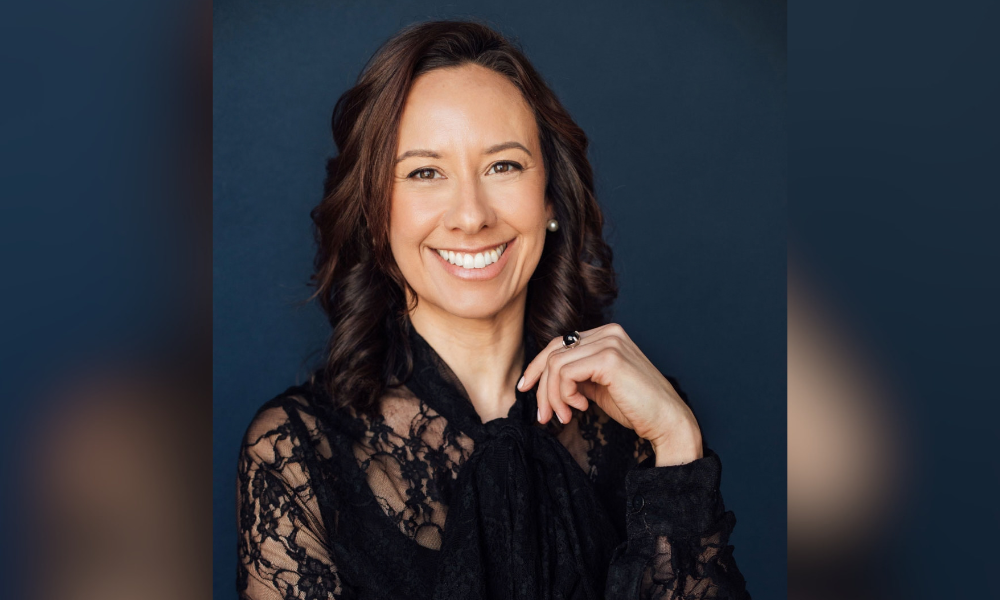
“Where I’ve seen the most increase are younger couples now entering their first relationship,” Battaglia says. “When I say younger, I’m talking about … late 20s, early 30s, and they’re entering into their first marriage or serious partnership where they’re moving in together.
“They want domestic contracts to define their rights and obligations,” she says.
Lorne Fine of Toronto-based firm Fine & Associates says he’s also seen increased demand for domestic agreements among young couples, including those who are not married but living in common-law arrangements. In his practice, couples seeking these agreements typically approach him to clarify rights regarding a residence one of them owns.
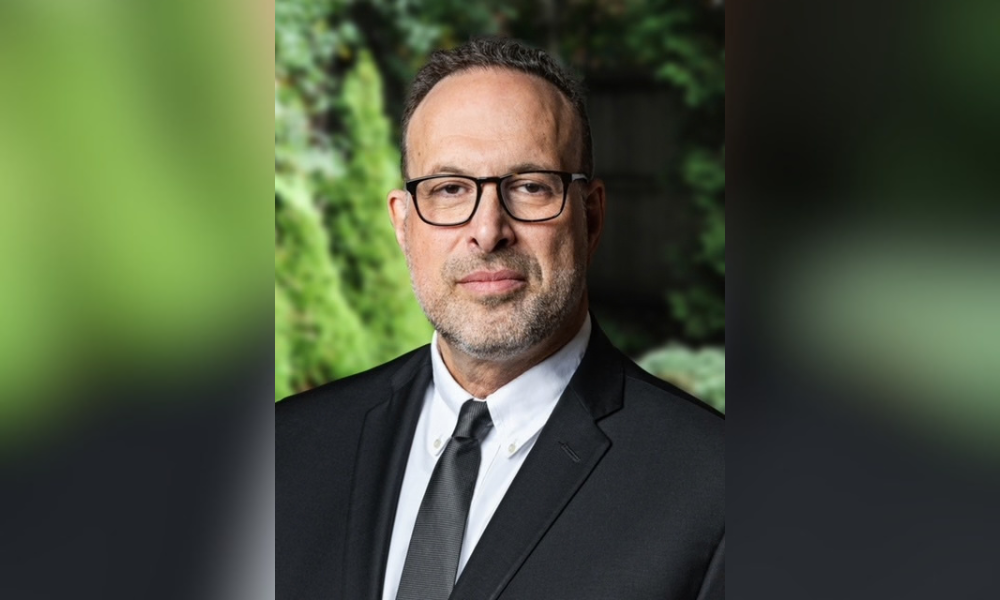
Common-law partnerships are “more and more common nowadays,” Fine says. “And it’s very difficult for them to go through the [separation] process with the uncertainty of not knowing exactly how things are going to end up.”
According to Statistics Canada, the number of common-law couples across the country increased by 447 percent between 1981 and 2021, accounting for nearly a quarter of couples by 2021. In contrast, the number of married couples grew only 26 percent over the same 40-year period.
Young people are especially likely to live in common-law arrangements. Statistics Canada found that in 2021, 79 percent of people aged 20 to 24 who were in a couple were living with a common-law partner. But older people are increasingly living with common-law partners, too. Among people aged 55 to 69 who are in couples, 16 percent were living in common-law arrangements in 2021, up from 13 percent in 2016.
Despite these trends, Ontario is one of several provinces that do not automatically grant common-law partners the same property-division rights as married spouses.
For married couples in Ontario, the province’s Family Law Act governs how they must divide their property when they separate. Under the act, separating spouses generally divide their wealth by determining the value of the assets they each own as of the date of separation, subtracting any debts and liabilities, and subtracting the value of the assets they initially brought into the marriage. The spouse calculated to have more assets then pays the difference – which is known as an equalization payment – to the spouse calculated to have the lower amount of assets.
There is an exception for matrimonial homes, meaning the home that the couple lived in together. If one spouse owned the home before the couple married, the value of the home at the date of separation cannot be subtracted from that spouse’s total assets. Instead, its value must be counted as an asset to be split with the spouse who doesn’t own the home.
This property-division framework does not apply to separating common-law partners in Ontario.
“For common-law couples, there’s not an equalization payment,” Fine says. “Common-law partners don’t have an automatic right to equalize property like married couples do.”
Battaglia offers an example of how this difference could play out. “If there were two people who were married and only one of the spouses owned the house [they lived in], they have to equalize the value of that house with their … spouse,” she explains. In her hypothetical scenario, the house is worth $1 million, and there’s a $500,000 mortgage on it. The couple would have to divide that equity in the house by including it with the other assets accounted for in the equalization formula.
However, “in the scenario where you have non-married spouses and only one of them owns the house, the [common-law] spouse who doesn’t own the house doesn’t get to share in the value of the house by way of equalization,” Battaglia says. “The Family Law Act says you’re not a legally married spouse, so we treat you differently.”
British Columbia is one of several provinces that take a different approach from Ontario, granting common-law partners the same property-division rights as married spouses. This has been the case since 2013, when the province’s Family Law Act replaced its decades-old Family Relations Act, obliging unmarried couples who have lived together for at least two years in a “marriage-like relationship” to split any property they acquired during the relationship when they separate.
For Fraser MacLean, a partner at Vancouver-based firm MacLean Family Law, BC’s Family Law Act is an improvement over the province’s previous family law regime. “If two people have organized their lives as a family unit for more than two years, the fact that they did not have a wedding should not necessarily mean one partner walks away with no statutory-property protection,” he says.

In practice, however, the current rules can pose challenges. Because individuals need to prove they were in a “marriage-like” relationship for at least two years to qualify for property-division rights, many end up getting into disputes about whether their relationship was sufficiently “marriage-like” and whether the two-year requirement was met, MacLean says.
“Not all serious relationships look the same,” he says. “Some couples maintain separate finances, some have separate bedrooms, some spend time apart for work, some intentionally avoid labels, so the ‘marriage-like’ analysis can become heavily evidentiary.”
A high-profile decision issued by the BC Supreme Court last year, however, suggests the courts are likely to interpret “marriage-like” broadly. In the dispute, MacLean represented a woman who dated and lived with an older philanthropist, estimated to be worth $150 million, from 2018 to 2021. The court noted that sexual behaviour, social activity, and financial arrangements are among the factors that must be considered when determining whether a couple is in a “marriage-like” relationship.
The philanthropist, Thomas Alan Budd, argued his former partner was not entitled to property-division rights because she did not love him and therefore lacked the “subjective intention” to be in a “marriage-like” arrangement. But the court disagreed, stating that love has never been a legal requirement for marriage. The court awarded his ex-partner more than $5 million in divided property.
MacLean says another challenge with BC’s current regime is that many people don’t understand how it works. A lot of clients come to him “blindsided” by BC’s rules, he says. More public education about property-division rights “would go a long way in how people arrange things in their relationship,” he argues.
Beyond domestic contracts, Battaglia says individuals in common-law arrangements in Ontario can look to a growing range of remedies to recover their contributions to things like property. Evolving case law has empowered non-married partners to seek compensation for contributions they made to a property, such as mortgage and property-tax payments or renovation costs. If they can prove it was a joint family venture with their partner, they can also file an unjust-enrichment claim.
However, these routes are not straightforward. Recovering money for contributions to a property, for instance, requires proof of those contributions, like bank statements. This can be hard to recover if the relationship spans many years.
“I do think there is a disadvantage, certainly still in this day and age, for people who don’t marry in Ontario but live in and contribute to a home together,” Battaglia says.