The allocation follows a bitter fee dispute where Merchant Law’s contingency fee agreement was found invalid
The Alberta Court of King's Bench has approved the distribution of a $7.5-million settlement in a national class action alleging that GlaxoSmithKline's antidepressant Paxil caused birth defects in children whose mothers took it during pregnancy.
In two separate orders on Sept. 8 in Singh v. GlaxoSmithKline Inc., Justice Janice Ashcroft approved the settlement fund’s distribution and set the legal fees for a consortium of plaintiff-side firms. Both orders direct the claims administrator to use best efforts to complete payments by Nov. 6.
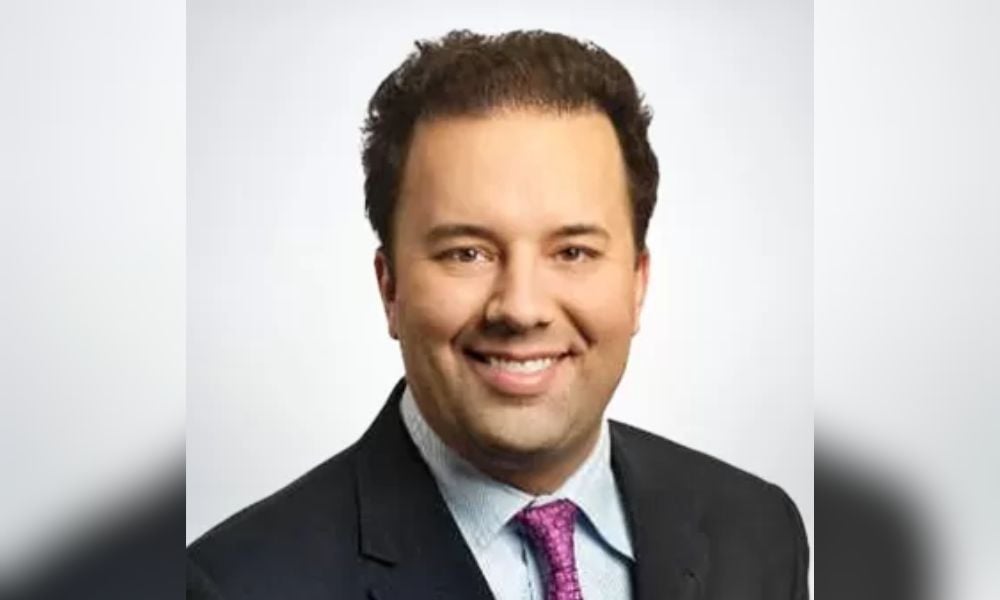
“There are no ‘winners’ in this case – many people suffered serious congenital birth defects as a result of the drug Paxil,” said Calgary-based Jonathan Denis of Guardian Law Group LLP, whose firm acted for several claimants. “While we are pleased with the outcome, we are hopeful that cases such as this provide an incentive for pharmaceutical manufacturers to take greater care in testing their products before they reach the market and avoiding other situations like this.”
Fiona Singh and her son, Muzaffar Hussain, brought the action against three GlaxoSmithKline (GSK) entities in 2012. They alleged that Paxil and Paxil CR, selective serotonin reuptake inhibitor antidepressants, increased the likelihood of congenital malformations in children born to women who took the medications during pregnancy.
The $7.5 million settlement was approved on Sept. 24, 2024.
Under the distribution order, every eligible claimant whose approved claim includes a structural cardiovascular defect must confirm by affidavit, no later than Sept. 29, that they have not been compensated for that defect through class proceedings in other provinces.
Claimants who were compensated elsewhere for a heart defect will be ineligible for compensation in the Alberta action, although they may be eligible for compensation for other qualifying malformations. The requirement reflects earlier Paxil litigation in British Columbia, which settled for $6.2 million in 2017.
The distribution order allocates $525,000 to provincial and territorial health insurers.
Other payments include:
- $560,235.25 to the claims administrator.
- $61,592.70 to the claims officer.
- $10,000 to Singh as an honorarium.
- $28,037.50 each to Norton Rose Fulbright Canada LLP, GSK’s counsel, and Napoli Shkolnik Canada, reimbursing them for the costs of the certification and settlement-approval notices.
The fees order divides the consortium's share of class counsel fees 90/10 between Napoli Shkolnik Canada ($537,961.62) and Guardian ($59,772.40). It also pays separate “Lawyers' Fees” tied to individual claimants, totalling about $560,000 plus GST. Overall, the consortium firms receive $1,157,143.93 in fees plus $57,856.70 in GST.
Merchant Law Group LLP, the plaintiffs' original counsel, receives $597,724.02 plus $29,886.20 in GST as its share of class counsel fees.
The allocation follows a bitter fee dispute. Singh changed counsel in 2019, moving from Merchant Law to the consortium, and disagreements over fee entitlements delayed resolution of the costs application.
In March 2025, Justice Jane Sidnell of the Alberta Court of King’s Bench held that a 2018 contingency fee agreement with Merchant Law was invalid, but used it to gauge reasonable expectations about fees. The court also ruled that the costs of the claims administrator, the claims officer and the honorarium should come out of legal fees rather than reduce class members' compensation.
In June 2025, the court declined to award costs of the March proceedings to any party. It found that the parties' conduct had needlessly prolonged the proceedings and that internal disputes among counsel, including pending litigation in Ontario, should not have affected the Alberta case.