BC appeal court raises loss of future earning capacity award for ophthalmologist injured in rear-end crash
A rear-end collision at a Vancouver intersection in 2018 set off an eight-year legal battle over how much an injured ophthalmologist lost, and could still lose, in her career. The British Columbia Court of Appeal (BCCA) answered that question in Clapson v. Knight, 2026 BCCA 352, raising the loss of future earning capacity award by $100,000 and wiping out a five percent mitigation deduction entirely.
The motor vehicle accident, and the injuries
Kathryn Clapson was a fourth-year ophthalmology resident at the University of British Columbia when Erin Knight rear-ended her vehicle at Burrard Street and Cornwall Avenue. While liability was never in dispute, the fight was entirely about how much Clapson was owed, both during trial and on appeal.
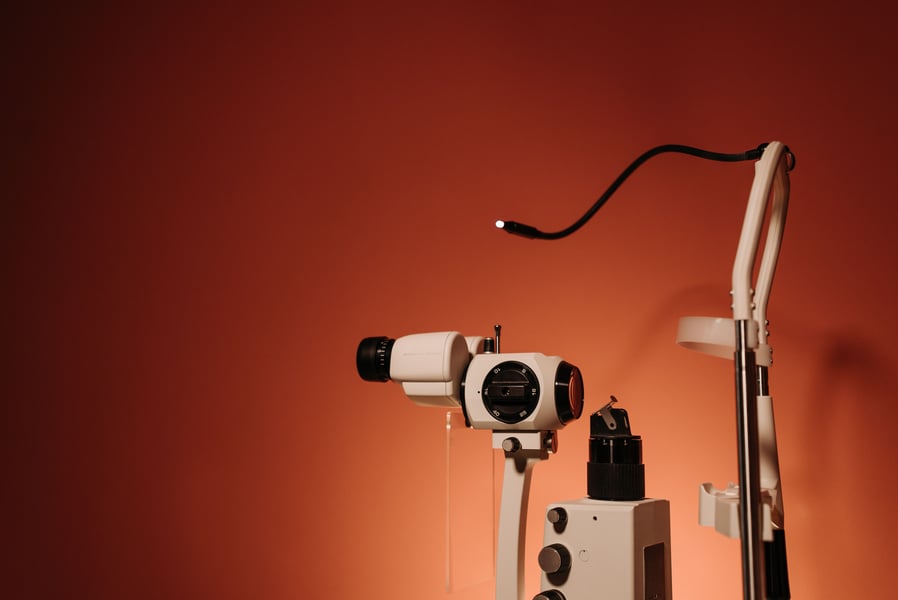
Clapson’s injuries were chronic neck and shoulder pain triggered by prolonged static postures and neck flexion, which directly conflicted with the demands of her work: surgery, slit lamp examinations, and laser treatments.
During trial, she sought more than $12 million for loss of past and future earning capacity. The trial judge awarded $100,000 for past loss and $1.375 million for future loss.
How a wrong retirement age affects loss of future earning capacity
The court identified a palpable and overriding error in how the trial judge calculated the future loss. The trial judge cut off the calculation at age 65, reasoning that by then Clapson would shift from surgery to clinical-only work, and that clinical work was “not aggravating” her symptoms.
The problem is that the trial judge’s own findings said otherwise. The court noted that:
- Clapson had already reduced her clinic hours from 5:00 p.m. to 4:30 p.m. because of pain
- Clapson’s pain was triggered by slit lamp use during patient examinations, which is a clinic activity, and not a surgical one
- multiple colleagues testified that ophthalmologists routinely work into their 70s
The BCCA set the retirement age at 75 and applied the correct economic multiplier of 19.352 from an expert economist’s report, rather than the 18.075 used at trial.
The future loss award increased from $1.375 million to $1.475 million.
This case shows that if a trial judge finds that a plaintiff’s injuries affect a specific activity, and that activity continues past the assumed retirement date, cutting the calculation short is an internal contradiction, and such will not survive appeal.
Why the trial judge’s mitigation finding didn’t hold up
The trial judge applied a five percent deduction across both awards, finding Clapson had failed to mitigate by not completing a formal active rehabilitation program guided by a kinesiologist. The BCCA set it aside.
Under the two-pronged test from Chiu v. Chiu, 2002 BCCA 618, a defendant must prove:
- that the plaintiff acted unreasonably, and
- the extent to which damages would have been reduced had they acted reasonably
In this case, the respondents failed on the second.
The BCCA also flagged a logical problem in the respondents’ position. Clapson’s limited time was largely because she was maintaining a full-time practice despite her injuries, which itself kept the earning capacity loss figures lower. It was contradictory to benefit from her diligence and then penalise her for not spending more time in rehabilitation.
The problem with “some positive benefits” as evidence
General language is not enough to meet the second prong. The BCCA relied on Murphy v. Snippa, 2024 BCCA 30, which confirmed that the defendant must prove with specificity the degree to which the injury would have been avoided.
The trial judge found both medical experts “would expect to see some positive benefits” from active rehabilitation. Neither gave specific evidence about how much Clapson’s condition or damages would actually improve. That fell short, according to the court.
The court also rejected the trial judge’s reliance on a cross-examination exchange where Clapson agreed that completing active rehab could “potentially” gain her one extra surgery day. Agreeing with a hypothetical, the BCCA said, cannot discharge a defendant’s burden of proof on the balance of probabilities.
Bookmark Canadian Lawyer’s Personal Injury page for more news, articles, and updates for Canadian legal professionals.