How Tandem Law founder Mesha Donaldson hires for culture, pays fairly, and protects wellbeing
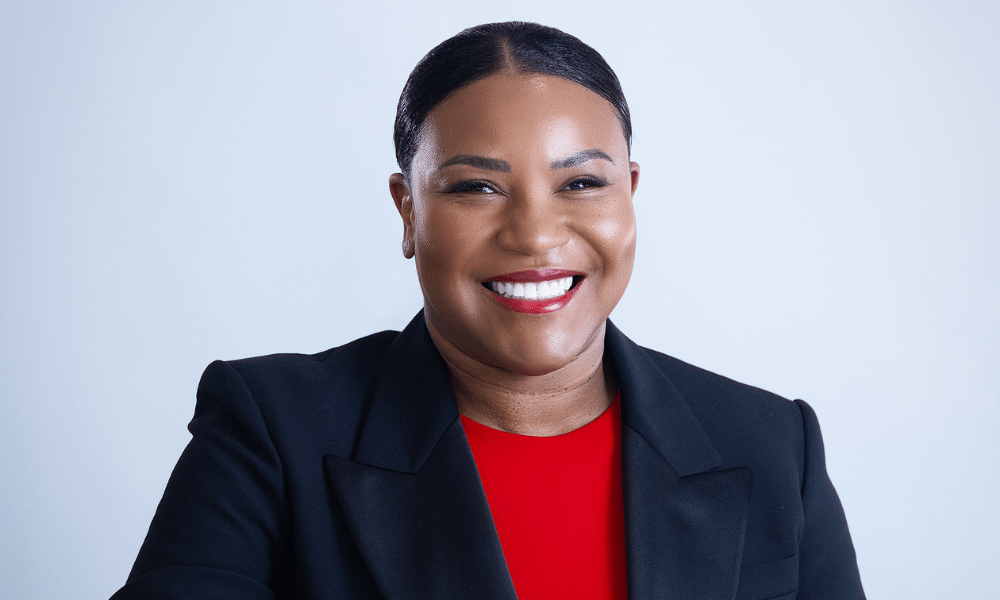
Building a sustainable legal team requires both a human approach and clear structure – and those two things, Mesha Donaldson argues, are far from mutually exclusive. Donaldson is the founder and managing partner of Tandem Law P.C., a family law, real estate, and wills and estates firm in Pickering, Ontario. Called to the Ontario bar in 2011 after completing law school at the University of Windsor, she made partner at her previous firm within three years before founding Tandem in 2016. She has spent the decade since building a team where everyone has a stake in the outcomes. Donaldson will speak on legal talent strategy at Canadian Lawyer’s Canadian Legal Summit, taking place on October 14 at The Carlu in Toronto.
Launching Tandem Law in 24 hours
In 2016, Donaldson left her previous firm to seek a different workplace culture. The urgency of her family law work set a deadline for her to launch a new firm. “With family law, you don’t want the clients stuck in limbo,” she says. Within 24 hours of leaving, she had a trust account open, PC Law installed, a website live, and a new phone number and email address secured. Most of her clients followed – a meaningful starting point for a firm that had existed for less than a day.
Her dual role at the previous firm – partner and office manager simultaneously – gave her an understanding of how to run a legal practice in Canada that most lawyers acquire on the job. “Because I had such a major role at the firm and learning the business of the firm, I felt like I had the tools to learn how to market myself, to create a website, to do everything that needed to be done,” she says. One gap she had not anticipated: finding a dependable bookkeeper. That, she says, was the steepest early challenge – resolved through her professional network.
Hiring for personality, not just credentials
Tandem’s current team includes partner Tricia Alcendor, associate Hritu Sarker, licensing candidate Rachel Stubbs, real estate clerk Elizabeth (Liz) Kolis, and office manager Laura Gilroy, who has been with Donaldson for nine years. That team was built over time, and not without difficulty. “You’re going to have to potentially hire a lot of individuals before you find a good fit for your firm,” she says.
Culture fit comes first. Family law means handling clients at their most vulnerable, and a team that cannot ease the emotional weight makes the work worse. “We laugh a lot at this firm,” she says. “So during the interview process, [I dropped] a joke here or there just to see if someone was receptive to it.” Beyond the interview, hiring is a collective decision. Every team member meets each candidate individually, and partner-level additions require still broader consensus. When Alcendor joined as a partner, the process took a long time. “It was actually a team discussion that took place over a couple of days to see how everyone, to gauge everyone’s comfort level,” Donaldson says. Moving away from that deliberate approach has consistently backfired. “Whenever we strayed from our expectations, we found that we ended up with someone who wasn’t a good fit,” she says.
Competing with Bay Street on compensation
Pickering is one GO Train stop from Toronto’s Bay Street corridor, and Donaldson is under no illusions about what that proximity means for salaries. She researches market rates through online comparables and conversations with other lawyers about what they pay associates, clerks, and assistants – then tries to match or exceed those figures. “I would rather take a bit of a pay cut myself to ensure that someone is being paid appropriately for the job that they are doing,” she says.
Compensation at Tandem is openly discussed rather than kept behind closed doors. Staff are encouraged to raise pay concerns directly, and Donaldson accounts for real-life circumstances – such as a new child or a recent home purchase – in those conversations. “I find sometimes money at firms causes a lot of issues,” she says; transparency is her response. Bonuses are tied to firm performance and reviewed every couple of months. “If the firm is doing well, everyone does well,” she says. Team members stay late on real estate closings without being prompted, reflecting the same shift that law firm leaders across Canada are making to retain legal talent. Non-monetary perks complete the picture: weekly lunches, a stocked fridge, and a rotating Instacart list for team members’ preferred snacks.
Why AI is not replacing a good clerk
Donaldson is not convinced that artificial intelligence changes the staffing calculus at a small family law firm. At a recent presentation, she heard a speaker note that AI tends to validate rather than challenge – precisely the trait she actively screens against in candidates. “I need someone who will tell me what I need to hear, not what I want to hear,” she says. The qualities she prizes – “judgment, honesty, critical thinking, and practical experience” – are, she believes, beyond what current tools can replicate. She acknowledges AI can reduce billable time on certain tasks, but remains skeptical about using it as a substitute for good people.
Boundaries that protect the team
Flexibility and structure run in parallel at Tandem because Donaldson has made both explicit. When a staff member returned from maternity leave, her hours were adjusted to accommodate fixed daycare pickup and drop-off times – without ceremony. Weekly planning meetings at the start of each week map the workload and flag where overtime may be needed. The arrangement is reciprocal. “I find because I’m not demanding as to their personal time, I find they’re willing to give me time when I need it,” she says.
The client-facing boundary is stated plainly: no emails after 5 pm or on weekends, with exceptions only for genuine emergencies. In a practice defined by the weight of family breakdown and estate disputes, that boundary protects the team’s mental health as much as anything else. “Family law is very heavy… you do need a mental break from work, especially when you’re doing family law,” she says.
This article is based on an episode of CL Talk, which can also be found here:
The episode is also available on our CL Talk podcast homepage, which includes links to follow CL Talk on all major podcast platforms.