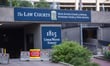
Of new British Columbian lawyers, 69 are male, 93 are female, 408 selected no gender

The Law Society of British Columbia’s newly released 2025 annual report details its recent progress on its priorities regarding the rule of law, lawyer independence, access to justice, Indigenous and mental health initiatives, and professional regulation.
“I’m pleased to reflect on a year of meaningful progress to fulfill our regulatory functions, advance key areas of focus and navigate a period of significant change as our constitutional challenge of the Legal Professions Act continued,” said Gigi Chen-Kuo, the law society’s chief executive officer/executive director.
On May 5, the BC law society and the Trial Lawyers Association of British Columbia shared that they had both filed notices of appeal against the Supreme Court of British Columbia’s dismissal of their challenge against the province’s Legal Professions Act.
In Chen-Kuo’s introduction to the annual report, she highlighted the law society’s development of a new strategic plan – revolving around the values of integrity, transparency, reconciliation, inclusion, innovation, and responsiveness – and the establishment of an Indigenous Initiatives department.
“Improving mental health in the legal profession continued to be a key priority,” Chen-Kuo said. “We expanded free, self-serve resources for legal professionals and their families through the Lawyer Well-Being Hub and addressed gaps in our regulatory model by making the Alternative Discipline Process a permanent program following a successful pilot.”
Law Society of British Columbia’s other updates
The BC law society’s annual report also provides updates on:
- lawyer development initiatives, including the regulator’s October 2025 announcement that it would be retiring the Professional Legal Training Course after four decades and instead adopting the Canadian Centre for Professional Legal Education’s Practice Readiness Education Program
- the regulator’s efforts to recognize excellence in the legal profession and in legal education, including through the Law Society Award, the Law Society Gold Medal, and the Indigenous Scholarship
- the work of the law society’s practice advice and policy teams
- the Trust Assurance Program
- the Lawyers Indemnity Fund
- the LSBC Tribunal
Herman Van Ommen, chair of the LSBC Tribunal, confirmed that the independent decision-making body continued to prioritize timeliness last year.
“Although the number of matters before the Tribunal declined due to fewer disciplinary citations and no credentials referrals, the cases that proceeded continued to involve complex and sometimes novel issues,” Van Ommen said. “Many required extensive and expert evidence, making them more time-consuming and resource-intensive for both the parties and the Tribunal.”
BC law society, by the numbers
The BC law society also published statistics on regulatory complaints, new members, member status, and demographics in its 2025 annual report.
Regarding complaints, the regulator shared that it:
- had 726 outstanding complaint files at the start of the year
- opened 1873 complaint files
- closed 1531 complaint files
- had 1068 outstanding complaint files at the year’s end
- handled 2599 complaint files in total
In terms of complaint outcomes, the law society noted that it:
- resolved 49
- considered 213 invalid
- did not find further action warranted for 285
- deemed 444 unsubstantiated
- declined to investigate 446
- resolved 14 via consent agreements
- let the Discipline Committee deal with 28
- resorted to the alternative discipline process (ADP) for nine
- set administrative penalties for 15
Regarding the status of the regulator’s registrants, 15,081 were practising, 1755 were non-practising, and 1161 were retired.
In terms of demographics for 2025, among the law society’s registrants:
- 3.1 percent were Aboriginal/Indigenous (First Nations, Métis, Inuit)
- 21.7 percent were racialized/persons of colour
- 5.5 percent were LGBTQ+
- 3.9 percent were persons with disabilities
- 45.2 percent did not identify with any of the aforementioned characteristics
- 20.5 percent opted not to answer the question
Of new lawyers who earned admission to the BC bar, the regulator noted that 69 were male, 93 were female, and 408 selected no gender.
The five most common areas of legal practice in BC were:
- civil litigation, including commercial matters, for the plaintiff’s side
- administrative, including matters involving labour, immigration, and regulatory bodies
- family, excluding incidental real estate, wills, and estates
- civil litigation for the defendant’s side
- wills and estates
On Sept. 9, 2025, the law society shared its 2024 annual report.
Enjoy this story? Read the latest professional regulation news on the main page!